Unlocking Young Minds: The Power of Easy Sudoku for Kids
Picture a quiet afternoon where a child is completely absorbed, pencil in hand, navigating a grid of numbers with focused determination. That’s the magic of a well-designed puzzle. Among the many brain-boosting activities available today, Easy Sudoku for Kids stands out as a timeless tool that blends fun with foundational learning. Whether you’re a parent looking for a screen-free activity, a teacher seeking classroom resources, or a KDP (Kindle Direct Publishing) creator building educational interiors, understanding the value of 6x6 Sudoku puzzles can open up a world of cognitive development for children. This article explores everything you need to know about easy Sudoku puzzles designed specifically for kids, including a ready-to-use pack containing 10 unique puzzles and 10 full solutions in a convenient 8.5 x 11-inch format.
What Makes Sudoku a Must-Have Activity for Children?
At first glance, Sudoku appears to be a simple numbers game. In reality, it’s a sophisticated exercise in logic, pattern recognition, and sequential thinking. For children aged 8 and up, the classic 9x9 grid can feel overwhelming. That’s precisely why 6x6 Sudoku puzzles have emerged as the perfect entry point. They strip away the intimidation factor while preserving every ounce of the mental workout.
Unlike rote memorization, Sudoku requires a child to engage in active problem-solving. Every placement of a digit from 1 to 6 must be justified by what’s already on the grid. There’s no guessing; only deductive reasoning works. This process builds what educators call “executive function”—the set of mental skills that include working memory, flexible thinking, and self-control. When a child solves an easy Sudoku puzzle, they’re not just passing time; they’re strengthening the very neural pathways that support math, reading comprehension, and even emotional regulation.
Exploring the Unique 6x6 Grid: A Gateway to Logical Thinking
The standard Sudoku grid for adults contains nine 3x3 sub-grids. The 6x6 Sudoku variant simplifies this by using six 2x3 blocks. The rules remain the same: each row, each column, and each block must contain the numbers 1 through 6 exactly once. This smaller scale reduces the number of variables a child must track, making it an easy level challenge that builds confidence rather than frustration.
Why 6x6 Works Better for Beginners
Young learners often struggle with sustained attention. A 9x9 grid can require 20 to 40 minutes of concentration, which is a big ask for a developing brain. A 6x6 puzzle, on the other hand, can typically be completed in 5 to 10 minutes. This shorter duration provides a rapid dopamine hit of accomplishment, encouraging the child to tackle the next puzzle. In a pack of 10 puzzles, like the one described here, you get a progressive journey of skill-building that doesn’t exhaust the solver.
Furthermore, the 6x6 format introduces core Sudoku concepts without abstract complexity. Children learn scanning techniques—checking rows, columns, and blocks for missing numbers—on a manageable scale. They also intuitively grasp constraints, learning that placing a '3' in one cell immediately affects the possibilities in intersecting areas. This is systems thinking in a microcosm.
Inside the “Easy Sudoku for Kids” KDP Interior Pack
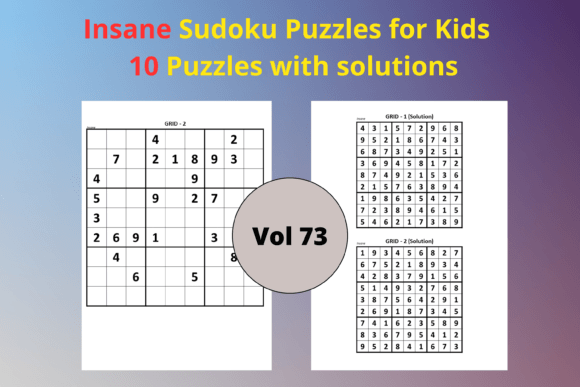
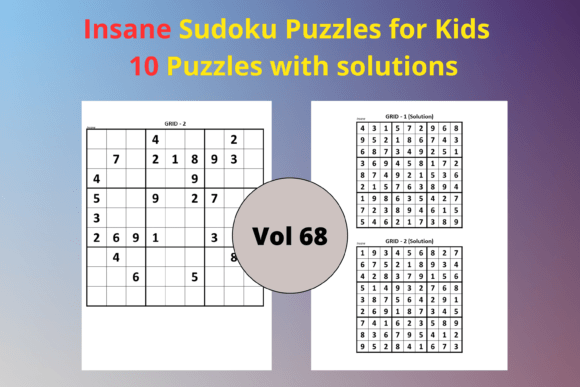
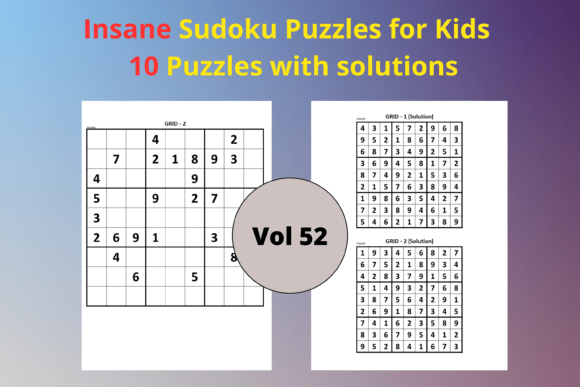
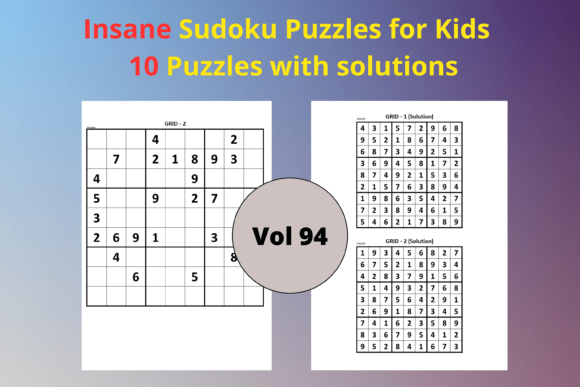
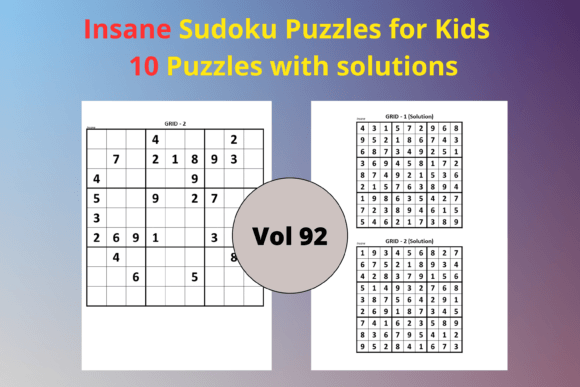
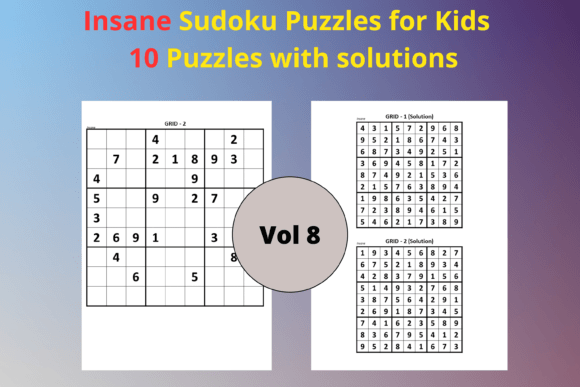
For creators and educators, having a professional, print-ready resource is essential. The Easy Sudoku for Kids pack is meticulously designed to serve as both a printable activity book and an editable template. It includes 10 puzzles and 10 solutions, ensuring that every challenge has a clear, checked answer key. The layout is clean and uncluttered, with large grids that leave plenty of room for children to write numbers clearly—a crucial design element often overlooked in mass-market puzzle books.
- 10 Unique Puzzles: Each 6x6 grid offers a fresh pattern of given numbers, ranging from slightly filled to moderately filled, maintaining an easy difficulty level throughout.
- 10 Full Solutions: Every puzzle has a corresponding solution page. These can be placed at the back of a printed book or used by parents and teachers for quick verification.
- Format Variety: The pack arrives as a PDF file ready to upload directly to Amazon KDP, and an editable PPTX file for those who want to customize instructions, branding, or add extra puzzles.
- Optimal Dimensions: Sized at 8.5 x 11 inches, the pages match standard letter paper, making at-home printing seamless and commercial printing cost-effective.
Why Editable PPTX Matters for Customization
While the PDF is perfect for a quick, passive-income KDP upload, the inclusion of an editable PowerPoint (PPTX) file significantly expands the product’s value. Teachers can add a school logo, write a motivational message in the header, or even reorder puzzles to create a customized workbook for their classroom. Parents planning a puzzle-themed party can insert clip art or adjust margins. This flexibility transforms a static set of puzzles into a dynamic educational tool.
Step-by-Step: How to Introduce Sudoku to a Child
Even an easy puzzle benefits from a gentle, guided introduction. Here’s a simple method using the 6x6 grids from this pack to ensure a child’s first experience is positive.
- Explain the Goal: “We need to fill every empty square with a number from 1 to 6. But there’s a rule: no number can repeat in the same row, the same column, or the same block.” Use your finger to trace a row, a column, and one of the 2x3 blocks.
- Start with a Row Scan: Choose a row that is almost full. Point to it and ask, “Which numbers are missing?” The child might say “2 and 5.” Then check the intersecting columns. If a column already has a 2, it forces the 2 into the other empty cell. Demonstrate this logic out loud.
- Move to Block Scanning: Pick a 2x3 block with several empty cells. Ask the child to find a number that can only go in one spot. For example, if the number '4' must appear in the block, look at the rows and columns crossing through it to eliminate all but one cell.
- Praise the Process: Celebrate every correctly placed digit. If a mistake happens, treat it as a detective’s clue: “Oh, we have two 3s in this row. That means we need to adjust something. Let’s look back.” This reframing from “failure” to “clue” fosters a growth mindset.
- Use the Solution Key Wisely: The included 10 solutions are excellent for building trust. Let the child check their own work occasionally, turning the answer key into a self-assessment tool rather than a secret to hide.
The Educational Benefits Beyond Numbers
Calling Sudoku a “math puzzle” is a bit of a misnomer. Although it uses digits, no arithmetic is involved. The real gains are in broader cognitive and character domains, making these Easy Sudoku for Kids puzzles a holistic developmental resource.
Building Patience and Persistence
In a world of instant digital gratification, sitting with a paper puzzle teaches delayed gratification. A child learns that some problems take a few minutes of quiet effort, and that feeling of “I did it!” at the end is earned. The 10-puzzle structure naturally supports this, offering a manageable series that can be completed over a week, a month, or a long car ride.
Enhancing Visual-Spatial Awareness
Scanning a grid requires the eyes to move systematically—left to right, top to bottom, and diagonally across blocks. This visual tracking strengthens the ocular motor skills needed for reading fluency. Dyslexia and reading specialists often recommend grid-based puzzles as supportive, non-stigmatizing exercises that complement traditional interventions.
Fostering Independence
Because the rules of a 6x6 Sudoku are self-contained, children can solve them without adult help once they grasp the basics. This independence is empowering. A child can grab a printed page from the 8.5 x 11 inch stack, a pencil, and work quietly, developing the ability to self-regulate their own activity—a precious skill for classroom management and home life alike.
Why This Pack Is Ideal for KDP Publishers and Educators
Kindle Direct Publishing has lowered the barrier to entry for creating activity books, but quality and originality remain the differentiators between top-selling books and those that languish. A product like Easy Sudoku for Kids, with its 10 puzzles and 10 solutions, serves as a plug-and-play interior. There’s no need to design grids from scratch, worry about solution accuracy, or format pages for bleed and margins. Everything is already done.
For KDP interiors, the PDF file ready to upload means you can publish a low-content book in minutes. The editable PPTX adds a layer of flexibility for niche targeting: add a name tracing section, combine with coloring pages, or create a blended “Puzzle and Doodle” book. The commercial rights embedded in such resources typically allow for resale in published formats, making it a cost-effective asset for a publishing business.
Educators, meanwhile, benefit from the print-and-go nature. Morning work, early finisher activities, or brain breaks are necessary in any classroom. Keeping a folder of these 6x6 sheets means you always have a constructive, quiet task that requires zero prep. And because it’s an easy level, you minimize the number of hands raised asking for help, preserving instructional time.
Common Misconceptions About Kids and Sudoku
Despite its proven benefits, some myths persist. Let’s address a couple of them directly so you can make an informed decision about using these puzzles.
Misconception 1: “Kids will get bored because it’s just numbers.” In practice, children view Sudoku as a code to crack. The visual appeal of a partly filled grid draws them in. Many even begin to see patterns and rhythms in the numbers, developing a fondness for the logic itself. The easy 6x6 format ensures the reward comes quickly enough to hold attention.
Misconception 2: “If it’s easy, it’s not really teaching anything.” An easy level puzzle teaches the fundamentals without cognitive overload. It’s the scaffolding that allows a child to internalize strategies they’ll later apply to harder grids. Skipping to complex puzzles too early often results in abandonment. These 10-puzzle packs build a solid foundation.
Misconception 3: “Digital apps are more engaging than paper.” While apps have their place, a printable PDF on 8.5 x 11-inch paper provides a tactile, distraction-free experience. There are no notifications, ads, or screen-glare issues. The physical act of writing digits refines fine motor skills and helps number formation stick in long-term memory. The included PPTX file even allows you to increase font size for special accessibility needs, something an app may not permit.
Creative Ways to Use the 10-Puzzle Pack
Beyond straightforward solving, these easy Sudoku grids lend themselves to creative, multidisciplinary applications.
- Collaborative Solving: Pair up children and have them alternate placing numbers, explaining their reasoning to each other. This strengthens communication skills and mathematical language.
- Timed Challenges: Use a gentle timer to see how long one puzzle takes. Track progress across the 10 puzzles and celebrate improvement in speed without sacrificing accuracy.
- “Create Your Own” Extension: After solving a few puzzles, challenge older children to design their own 6x6 Sudoku using the blank template from the editable PPTX. They must create a solvable puzzle with a unique solution, flipping them from consumer to creator.
- Incorporate into Storytelling: Frame the puzzle as a treasure map. “To find the hidden treasure, you must unlock the grid by placing the numbers correctly.” This narrative layer enchants younger solvers aged 5-7 who might be ready for an easy challenge.
How to Choose Quality Sudoku Resources for Children
Not all puzzle books are created equal. When evaluating interiors like this Easy Sudoku for Kids pack for your home, classroom, or KDP business, consider the following criteria:
- Solution Accuracy: A poorly checked grid that has multiple solutions or a broken path teaches frustration, not logic. A pack with verified solutions—explicitly included as a separate section—shows attention to quality.
- Age-Appropriate Sizing: The 8.5 x 11-inch size with generously spaced cells is non-negotiable. Small, cramped grids discourage neat handwriting and strain young eyes.
- Clear Difficulty Labeling: “Easy” should mean easy. In this pack, the 6x6 structure with careful given-number placement ensures a gentle on-ramp. Be wary of resources that mislabel difficulty levels, as they can erode a child’s confidence.
- Format Versatility: A PDF file ready to upload paired with an editable PPTX offers a blend of polish and flexibility that’s rare. The PDF preserves the professional look for printing and publishing, while the PPTX invites endless customization without starting from scratch.
Bringing It All Together: A Daily Dose of Logic
Incorporating these 6x6 Sudoku puzzles into a daily or weekly routine can yield remarkable cumulative effects. Ten puzzles provide over two weeks of school-day brain teasers, or a compact adventure for a family vacation. The format is forgiving—no installation, no batteries, just a pencil and a curious mind. Whether used as a KDP interior for a commercial product, a classroom handout, or a rainy-day activity at the kitchen table, the value persists far beyond the pages.
Parents and teachers often report that after consistent exposure to puzzles like these, children start applying logical frameworks to other areas: organizing their backpack, planning a sequence of chores, or understanding cause and effect in a story. That transferability is the true gift of early logic training. And it all begins with a simple, inviting grid that whispers, “You can solve me.”
The Easy Sudoku for Kids pack—10 puzzles, 10 solutions, perfectly sized and ready to go—stands as a small but mighty tool in that developmental journey. It honors the child’s intellect, meets them at their level, and gently guides them toward the satisfaction of independent problem-solving. In a world of noise and distraction, there’s profound value in something so elegantly straightforward.