Unlocking Young Minds: The Complete Guide to Easy Sudoku for Kids
Picture a quiet afternoon, a child’s brow slightly furrowed in concentration, a pencil in hand, and a simple 9x9 grid on the table. That image captures the quiet power of easy sudoku for kids—a puzzle that feels like a game but works like a full brain workout. If you’ve ever wondered whether children really benefit from logic puzzles or what makes a sudoku “easy” enough for a first-grader, this comprehensive guide breaks it all down. We’ll explore not just how sudoku works, but why it has become a beloved educational tool for parents, teachers, and homeschoolers. And if you’re looking for ready-to-print materials, we’ll walk you through a specially designed pack of 10 easy sudoku puzzles for kids that comes complete with solutions and is formatted for effortless printing—perfect for KDP interiors, classroom use, or rainy day fun.
What Exactly Is Sudoku, and Why Is It So Great for Kids?
Sudoku is a logic-based number placement puzzle. The classic version uses a 9x9 grid divided into nine 3x3 subgrids (called boxes). The goal is to fill every row, column, and 3x3 box with the digits 1 through 9, without repeating any number within any row, column, or box. At the start, some numbers are already filled in as clues. What makes sudoku unique is that it requires zero arithmetic—only pure logic, pattern recognition, and deduction. For children, this is a revelation: they get to be detectives who solve mysteries using reasoning instead of memorizing math facts.
Many parents mistakenly assume sudoku is too advanced for young learners. In reality, an easy sudoku for kids uses a carefully balanced set of starting clues that guide the solving process without overwhelming the child. At the easy level, the puzzle might begin with over 30 pre-filled numbers. Each logical step can be found with simple scanning techniques. This ensures early successes build confidence, which is critical for keeping kids engaged.
The Many Cognitive Benefits of Sudoku for Children
Introducing sudoku early does far more than pass the time. Research on puzzle-solving and cognitive development points to several key benefits that directly support academic growth and life skills.
- Strengthens Logical Reasoning: Sudoku forces the brain to make “if-then” connections. If a “4” is placed in this row, then it cannot appear elsewhere in that row or the adjacent 3x3 box. This type of deductive reasoning is foundational for science, technology, engineering, and math (STEM) subjects.
- Improves Focus and Concentration: Solving even an easy grid demands sustained attention. Over time, children learn to tune out distractions and stick with a task until completion—a powerful executive function skill.
- Builds Pattern Recognition: The brain learns to scan rows and columns for missing numbers, automatically noticing patterns. This visual-spatial skill later supports reading fluency, geography, and even art.
- Enhances Working Memory: Keeping track of possible numbers for several cells simultaneously exercises working memory, which is like the brain’s sticky note pad.
- Encourages Patience and Resilience: A puzzle isn’t solved instantly. Mistakes happen. Learning to erase, reconsider, and try again builds a healthy problem-solving mindset.
For educators and parents following child development best practices, these benefits explain why easy sudoku puzzles are increasingly found in elementary classrooms and at kitchen tables. They nurture a growth mindset by rewarding effort rather than innate talent.
What Makes an “Easy” 9x9 Sudoku Perfect for Young Beginners?
Not all 9x9 sudokus are created equal. Puzzle difficulty is determined by the placement and quantity of given numbers, as well as the solving techniques required. An easy sudoku for kids typically:
- Contains between 30 and 45 starting clues (givens).
- Can be solved using only basic strategies: “naked singles” (a cell that can contain only one possible number because all other numbers appear in the same row, column, or box) and simple cross-hatching.
- Does not require more advanced moves like “hidden pairs” or “X-wings” that might frustrate a novice.
- Often features a larger, clearer grid with kid-friendly typography.
While some children’s sudoku books use 4x4 or 6x6 grids, the classic 9x9 sudoku offers a satisfying, “grown-up” challenge without being too intimidating when designed at an easy level. Children as young as 6 or 7 can thrive with 9x9 puzzles when they have strong visual guides and immediate access to solutions for self-checking.
Introducing a Ready-to-Use Resource: 10 Easy Sudoku Puzzles for Kids (Pack 52)
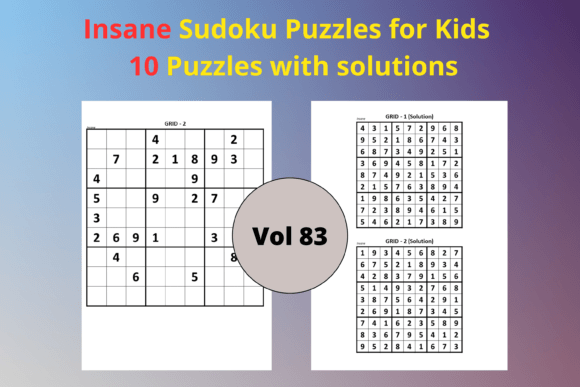
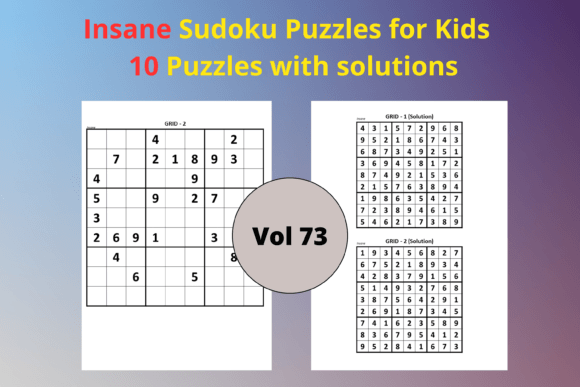
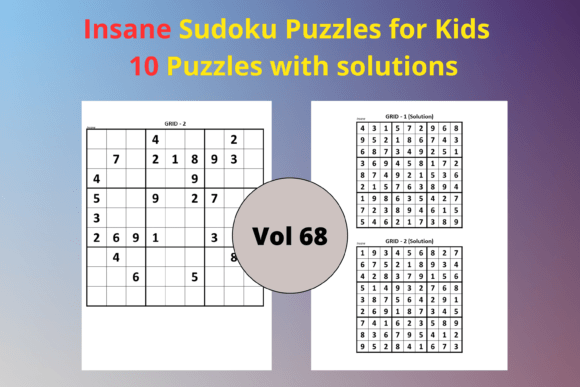
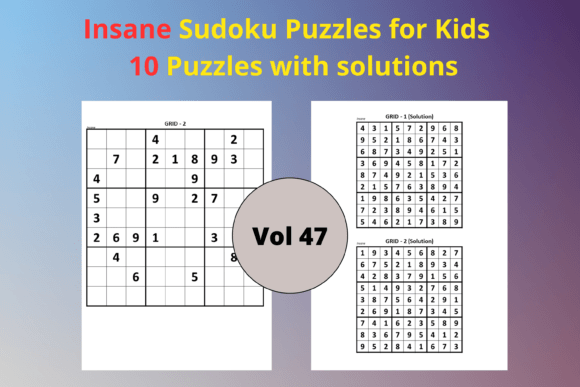
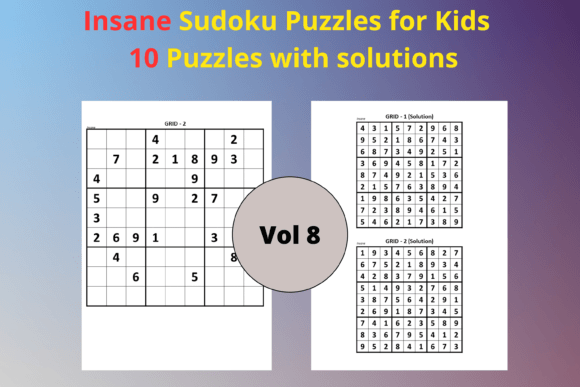
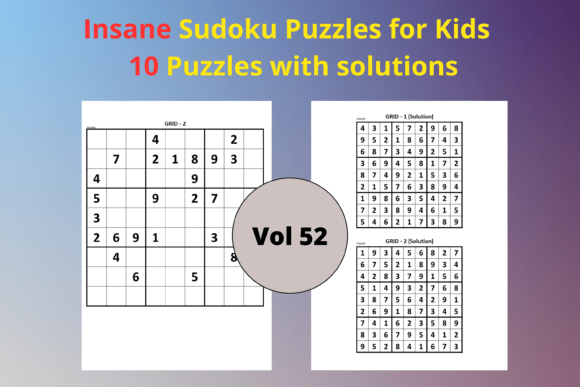
For parents who want a no-prep activity and for teachers building a classroom logic center, a printable sudoku pack is a lifesaver. The Easy Sudoku for Kids 52 collection provides exactly that—10 fresh, thoughtfully designed 9x9 puzzles at the easy level, each paired with its own solution. This isn’t just a random assortment; it’s a complete KDP interior, which means it’s already formatted to professional standards for immediate use. Here’s what’s included and why it stands out.
A Closer Look at the Pack’s Contents
When you open this bundle, you’ll find a clean, organized layout that respects both the child’s experience and the adult’s need for convenience. The package includes:
- 10 unique easy sudoku puzzles (9x9 grid) – each puzzle is fresh, with no repeats, providing enough material for a long weekend or a daily classroom challenge.
- 10 corresponding solution pages – one solution per puzzle, clearly displayed so children can check their own work, promoting independence and self-assessment.
- Two file formats: a print-ready PDF file that requires no software finesse—just open and print—and an editable PPTX file (Microsoft PowerPoint) for those who want to customize headings, add instructions, or even adjust the grid colors before printing.
- Standard 8.5 x 11 inch page size – the most common paper dimension in North America, making at-home printing or photocopying a breeze.
Because it’s designed as a KDP interior (Kindle Direct Publishing), the file meets all technical requirements for creating a bound or paperback activity book. But you don’t need to publish a book to benefit. Teachers can print individual puzzles for morning work. Homeschoolers can slip them into a binder. Grandparents can print a copy to enjoy screen-free bonding time. The versatility is immense.
Creative Ways to Use Easy Sudoku Puzzles in Daily Life
While a stack of printed puzzles on the kitchen table works wonderfully, thinking outside the box multiplies the educational value. Consider these practical ideas:
Classroom Brain Breaks and Math Centers
Instead of using only worksheets, frame sudoku as a “logic challenge of the day.” Project one puzzle onto the whiteboard (using the PPTX file) and solve together as a class. For independent work stations, print puzzles on cardstock and laminate them; kids can use dry-erase markers and then check their answers with the provided solution page. This reduces paper waste while keeping the activity fresh.
Screen-Free Travel Entertainment
A printed sudoku pack slides easily into a travel folder or the car seat pocket. Whether on a long flight or waiting at a restaurant, an easy 9x9 puzzle gives young minds a constructive focus point that doesn’t involve a screen. The included solutions mean they can verify their work without needing an adult’s help—a huge self-confidence boost.
Homeschool Logic Curriculum Supplement
Families using classical or Charlotte Mason approaches can incorporate sudoku into the weekly rhythm as a “formal logic” activity beginning in early elementary. The editable PPTX format allows parents to type the child’s name or date on the page, or even translate brief instructions into another language.
Party Favors and Gift Bags
Looking for a non-candy, screen-free birthday party favor? Print several puzzles, roll them into scrolls tied with a ribbon alongside a small pencil. The “easy” level ensures every guest, regardless of prior experience, can enjoy the puzzle. The solutions let each child be their own corrector, turning the activity into a mini treasure hunt for the right answer.
Addressing Common Myths About Sudoku for Kids
Despite its popularity, a few misconceptions persist. Let’s clear them up so you can embrace sudoku with confidence.
Myth 1: “Sudoku requires strong math skills.”
Fact: Sudoku uses numbers, but they are merely symbols. You could just as easily use letters, shapes, or emojis. The puzzle is about logical relationships, not calculation. This makes it inclusive for children who are anxious about math.
Myth 2: “It’s too hard for young kids.”
Fact: With easy sudoku for kids, the difficulty is calibrated. Many 6-year-olds successfully solve 9x9 puzzles after a brief tutorial. The key is starting with well-designed puzzles that don’t require advanced solving strategies. The “Easy Sudoku for Kids 52” collection was built around this principle.
Myth 3: “You need special software or apps.”
Fact: Printable puzzles remain one of the simplest, most accessible formats. No Wi-Fi required. No batteries to recharge. This digital download gives you unlimited prints, but the ultimate activity is pencil-and-paper, which research shows improves retention and focus better than screen-based puzzles for many learners.
How to Get the Most Out of Your Printable Sudoku Pack
To ensure a smooth and successful solving session, follow these simple suggestions:
- Start together. Sit with your child for one puzzle. Think aloud: “Let’s look at this row. We have a 1, 2, 3, 5, 6, 8, 9. Which number is missing?” Model the scanning process without rushing.
- Use a pencil with a good eraser. Lightly penciling in possible numbers (candidates) is a powerful strategy even at the easy level. Kids love being able to erase a guess and not feel “wrong.”
- Highlight the solution page as a learning tool, not a cheat sheet. If a child is truly stuck, encourage them to look at only the next cell’s number in the solution, then try to figure out why that number goes there. This turns a moment of frustration into a teaching opportunity.
- Mark progress. Print multiple copies of the same puzzle if you have several children, or use the PDF to print a fresh page if one becomes too messy. The editable PPTX allows you to add a “Puzzle completed on” date field, turning the pack into a keepsake record of growing skills.
Why This Pack Is a Smart Choice for Parents and Educators
With countless sudoku resources available online, what makes the Easy Sudoku for Kids 52 collection worth your time? Three key advantages: deliberate design, immediate usability, and unending flexibility. Each puzzle has been checked for a clean, logical solving path. No guesswork was required in the design. The dual-format delivery means you can print out a quick activity in seconds or customize the file to suit a specific student’s needs. And because it adheres to KDP interior specifications, anyone who dreams of creating their own puzzle book for sale or classroom use can use this as a professional starting point—simply upload and go, or tweak the PPTX to match your branding.
In a world that often pushes children toward fast-paced digital games, a printable sudoku offers a refreshing change of pace. It’s a quiet, self-contained challenge that builds real skills, fosters independence, and creates a sense of achievement. The 10 easy puzzles with solutions provide just the right amount of challenge without causing fatigue, making them ideal for daily practice over a term, a school holiday, or a set of themed learning weeks.
Sudoku is more than a pastime—it’s a gateway to clearer thinking. By giving children the right tools at the right difficulty level, you equip them with habits of mind that will serve them for a lifetime. And with a beautifully formatted, instantly downloadable pack, you’re never more than a few minutes away from kickstarting that next “aha!” moment.