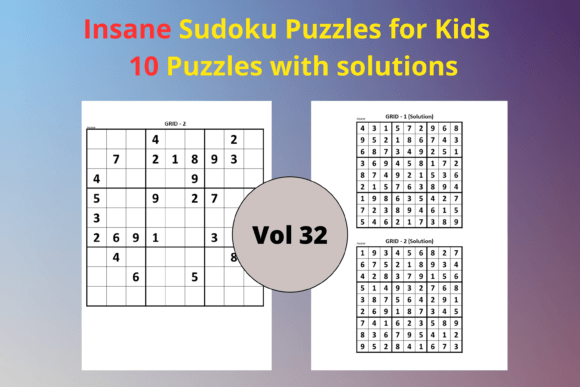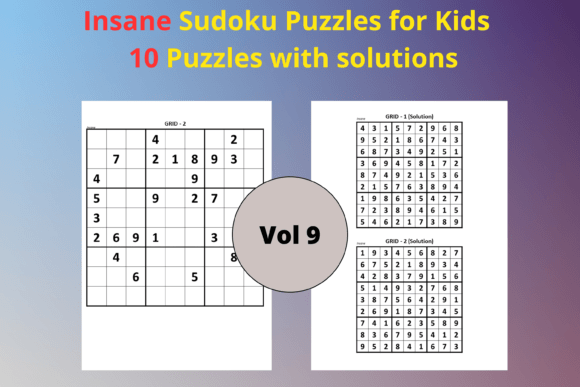
Getting Started with Easy Sudoku for Kids 9: Building Logic Skills Through Play
Introducing children to puzzles that challenge their minds without frustrating them is one of the most rewarding experiences a parent or educator can have. Easy Sudoku for Kids 9 represents a sweet spot in puzzle design — sophisticated enough to hold a nine-year-old's attention, yet accessible enough to build confidence rather than chip away at it. The 6x6 grid format, in particular, offers a manageable stepping stone between the very simple 4x4 puzzles and the full-sized 9x9 grids that adults often tackle.
What makes this puzzle collection stand out is its thoughtful construction. Each of the ten puzzles included in the pack has been calibrated to the easy level, which means young solvers can complete them independently while still experiencing genuine satisfaction. When a child finishes a puzzle and sees that their solution matches the provided answer, the sense of accomplishment is palpable — and that feeling is what keeps them coming back for more.
Why 6x6 Sudoku Works So Well for Young Minds
The 6x6 sudoku format occupies a unique space in the puzzle world. Unlike the standard 9x9 variant that requires tracking nine numbers across rows, columns, and 3x3 boxes, the 6x6 grid uses only the digits 1 through 6 and divides the board into 2x3 rectangular blocks. This reduction in complexity is not a compromise — it is a deliberate design choice that respects a child's developing working memory and attention span.
Children around ages nine and ten are at a stage where their logical reasoning abilities are maturing rapidly. They can hold multiple constraints in mind, but they still benefit from visual structures that make patterns easy to spot. The 2x3 subgrid format of Easy Sudoku for Kids 9 does exactly that: it gives the eye natural anchor points while scanning for missing numbers. A child might notice that the number 4 appears in two of the three blocks in a row and quickly deduce where the third 4 must go. Small victories like these accumulate into a genuine understanding of deductive reasoning.
What You Get Inside the Puzzle Pack
This particular sudoku collection arrives as a ready-to-use KDP interior, which means the formatting, spacing, and layout are already optimized for print. The package includes 10 puzzles and 10 corresponding solutions, each printed clearly on its own page to prevent any bleed-through confusion. For those who need to make adjustments — adding a title page, tweaking margins, or incorporating branding — an editable PPTX file accompanies the standard PDF.
The specifications are practical and publisher-friendly: 8.5 x 11 inches, which is the standard trim size for many activity books on Amazon KDP and similar platforms. This means creators can upload the PDF directly without wrestling with reformatting or worrying about content getting cut off during printing. The solutions are placed logically after each puzzle or in a dedicated section, making it straightforward for kids to check their own work or for parents to verify answers without hunting through the book.
Designing Puzzles That Teach Rather Than Test
There is a meaningful difference between a puzzle that tests knowledge and one that teaches through engagement. Easy Sudoku for Kids 9 falls firmly into the latter category. Each puzzle begins with enough pre-filled numbers that a child never faces a completely blank canvas — which can be paralyzing — but not so many that the solution is trivial. The balance encourages scanning, hypothesis, and correction, all within a low-stakes environment.
One of the underappreciated benefits of sudoku for children is the way it normalizes mistakes. A child fills in a number, realizes two rows down that something is off, and must backtrack. This process, far from being discouraging, teaches resilience and systematic thinking. The easy level ensures that such moments are infrequent enough not to overwhelm, yet present enough to build mental flexibility. Over time, children begin to internalize the check-and-recheck habits that serve them well in mathematics, coding, and any structured problem-solving domain.
The Role of Visual Clarity in Kids' Puzzles
Adults often overlook how heavily children rely on visual cues when learning new formats. A cluttered sudoku grid with cramped numbers or faint lines can turn a pleasant challenge into a confusing chore. The grids in this collection feature generous spacing and distinct subgrid boundaries. The numerals are sized appropriately for young eyes, and the solution pages mirror the puzzle layout exactly, which aids in self-correction. For children with dyslexia or visual processing differences, this clarity is not a luxury — it is essential.
Practical Applications Beyond the Living Room Table
While many families will use these puzzles as a quiet afternoon activity, the versatility of the format extends into professional and institutional settings. Teachers can integrate the 6x6 sudoku puzzles into math centers or use them as warm-up exercises that prime logical thinking before a lesson. The easy level means most students can start without extensive instruction, freeing up the teacher to circulate and support individuals rather than delivering a lengthy explanation to the whole class.
After-school programs and tutoring centers also find value in structured puzzle materials. Easy Sudoku for Kids 9 serves as an engaging alternative to screen-based activities, offering a tactile experience that develops fine motor skills alongside cognitive ones. Therapists working with children on executive function skills — planning, organization, impulse control — sometimes incorporate sudoku into their sessions because the puzzles naturally reward pausing to think before acting.
Homeschooling and Supplemental Learning
Homeschooling parents consistently look for resources that combine education with genuine enjoyment. Sudoku fits neatly into this niche. A child who resists formal math drills may happily spend twenty minutes working through a puzzle without realizing they are practicing logical deduction, pattern recognition, and number sense. The 6x6 format also introduces the structural concepts of sudoku — unique entries per row, column, and subgrid — that transfer directly to the 9x9 puzzles when the child is ready to advance.
Creating and Customizing with the Editable PPTX File
One of the most practical features of this package is the inclusion of an editable PPTX file. While the PDF is ready for immediate upload, the PowerPoint file grants complete control over the content. A publisher might want to add their logo, adjust the font to match a series aesthetic, or rearrange the puzzle and solution order. Teachers could insert the puzzles into a larger workbook alongside other activities. The editable format removes the friction that often accompanies static PDF purchases, making the resource adaptable rather than rigid.
Customizing for specific age groups is another possibility. While the puzzles target nine- and ten-year-olds, slightly younger children with strong puzzle affinity or slightly older children who benefit from confidence-building practice can both find a home here. Adjusting the title page or adding a brief instruction section tailors the material without altering the core puzzle content.
Print Specifications and Quality Considerations
The 8.5 x 11 inch dimensions work well for standard home printers and commercial printing services alike. Each puzzle fills the page without awkward white space, and the solution pages maintain the same proportions for consistency. For those publishing through KDP, the PDF is formatted to meet trim and bleed requirements when using standard interior settings. This means fewer upload rejections and less back-and-forth during the publishing process — a significant time-saver for creators managing multiple titles.
Who Benefits Most from This Puzzle Collection
The audience for Easy Sudoku for Kids 9 is broader than one might initially assume. Parents seeking screen-free entertainment for long car rides, waiting rooms, or rainy weekends represent the most common users. However, the KDP-ready format positions this pack as a valuable asset for self-publishers and content creators who want to build activity books without designing puzzles from scratch. The licensing typically allows for use in derivative works, which means the puzzles can form the backbone of a larger publication.
Occupational therapists and special education professionals also find sudoku useful for developing sustained attention and sequential processing. The easy level provides enough structure that children who struggle with open-ended tasks can still participate fully. The clear solutions remove any ambiguity, allowing for independent self-checking that builds autonomy — a key goal in many therapeutic and educational contexts.
Evaluating Difficulty and Progression
Not all "easy" sudoku puzzles are created equal. Some publishers label puzzles as easy when they are, in fact, medium-difficulty puzzles with more given numbers. The puzzles in this collection maintain genuine easiness by ensuring that straightforward scanning techniques suffice for solution. Children do not need to learn advanced strategies like candidate elimination or X-wing patterns — skills that are better introduced later, on larger grids. For a nine-year-old encountering Easy Sudoku for Kids 9 for the first time, the path from start to finish should feel like a guided discovery rather than a grueling mental workout.
Parents and teachers can use the ten-puzzle set to gauge a child's readiness for harder material. If all ten puzzles are completed quickly and accurately, the child may be ready to advance to medium-level 6x6 puzzles or even beginner 9x9 grids. If some puzzles take longer or require hints, the child is building exactly the skills they need, and the set continues to offer appropriate challenge through the remaining puzzles.
Comparing 6x6 to Other Sudoku Sizes
The 4x4 sudoku, often used with very young children (ages 5–7), introduces the basic rule structure but lacks the complexity to hold an older child's interest. The 9x9 sudoku, while standard for adults, can overwhelm beginners with its sheer number of empty cells and the need for more elaborate solving techniques. The 6x6 size bridges these extremes gracefully. It introduces the rectangular subgrid concept — which does not appear in 4x4 puzzles — while keeping the total cell count manageable at 36. For nine- and ten-year-olds, this balance is nearly ideal.
Bringing Sudoku into Daily Routines
Establishing a puzzle habit does not require a formal curriculum. Many families find that keeping a printed puzzle or two on the breakfast table invites a calm, focused start to the day. Others use sudoku as a wind-down activity before bedtime, replacing screen time with something that settles the mind without overstimulation. The portability of printed puzzles means they can travel in a backpack, live in a car seat pocket, or sit on a coffee table without any setup or cleanup.
For content creators and business owners, the ready-to-upload nature of the PDF eliminates the friction between idea and product. A KDP activity book featuring Easy Sudoku for Kids 9 can go from concept to published listing in a matter of hours, not weeks. The editable PPTX file adds a layer of flexibility that static content alone cannot provide, enabling branding, reformatting, and integration with other puzzle types or activity pages.
Final Thoughts on Choosing Quality Puzzle Content
In a market flooded with low-effort puzzle books, the details distinguish a product that families return to from one they discard after a single use. Legible fonts, logical puzzle progression, accurate solutions, and printer-friendly formatting are not glamorous features, but they are the ones that matter most in daily use. Easy Sudoku for Kids 9 delivers on these fundamentals while keeping the focus where it belongs: on the child's experience of engagement, challenge, and success.
Whether you are a parent looking for weekend activities, a teacher building a classroom resource library, or a publisher assembling the next activity book title, the combination of carefully constructed 6x6 puzzles and flexible file formats provides a foundation worth building on. The puzzles themselves, with their easy-level designation, ensure that young solvers finish feeling capable — and that is perhaps the most important outcome of all.