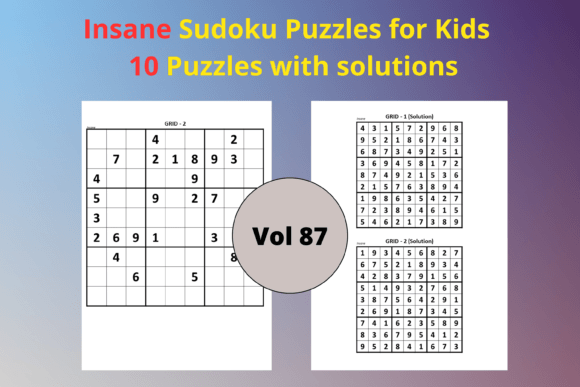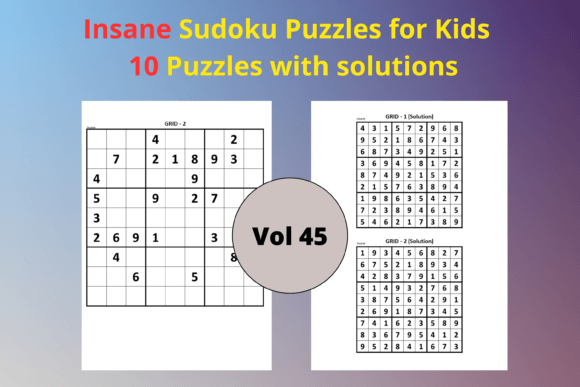
Easy Sudoku for Kids 45: Simple Puzzles That Build Confidence and Logic Skills
Finding the right puzzle activity for young learners often feels harder than it should. You want something that challenges without frustrating, teaches without lecturing, and keeps a child genuinely engaged. That is exactly where Easy Sudoku for Kids 45 fits. This pack of ten carefully crafted 9x9 Sudoku puzzles, complete with solutions, gives children a gentle introduction to logical reasoning while delivering the kind of quiet satisfaction that only comes from solving something on their own.
But not every puzzle set marketed to children lives up to that promise. Many parents, teachers, and creators grab the first brightly labeled "easy" puzzle file they see, only to discover the grids are too cramped, the difficulty spikes unexpectedly, or the formatting falls apart when printed. Before you download, buy, or upload a Sudoku pack for KDP, classrooms, or at-home learning, a few overlooked details can save you from wasted time and disappointed kids.
What Makes This Sudoku Pack Different for Young Solvers
A standard 9x9 Sudoku grid contains 81 cells. For an adult, that is a pleasant mental workout. For a child aged six to ten, it can look like an overwhelming sea of empty boxes. The Easy Sudoku for Kids 45 pack addresses this by balancing difficulty and accessibility. Each puzzle includes enough pre-filled numbers to guide logical deduction without handing over the answer. The "easy" level here genuinely means easy — not just "slightly less hard than medium."
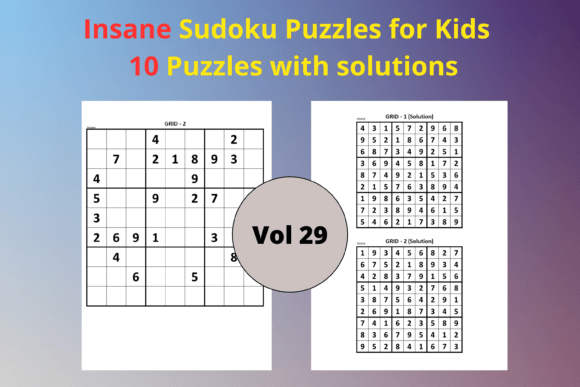
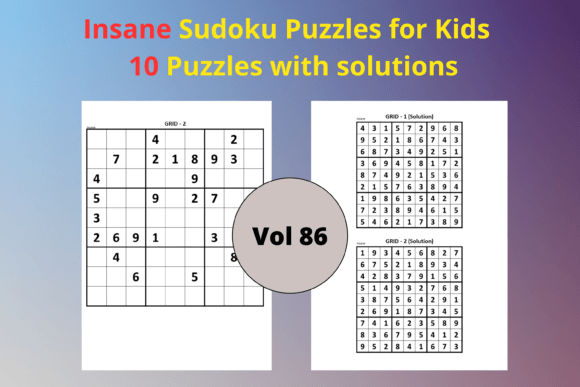
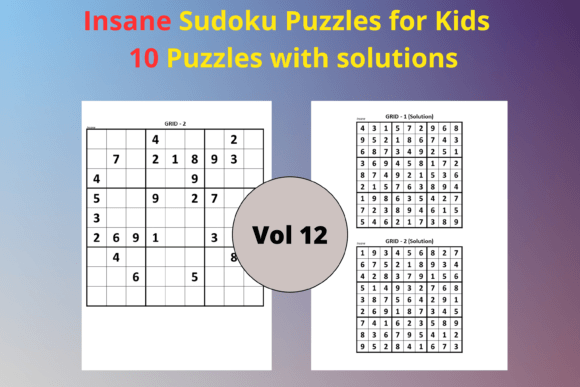
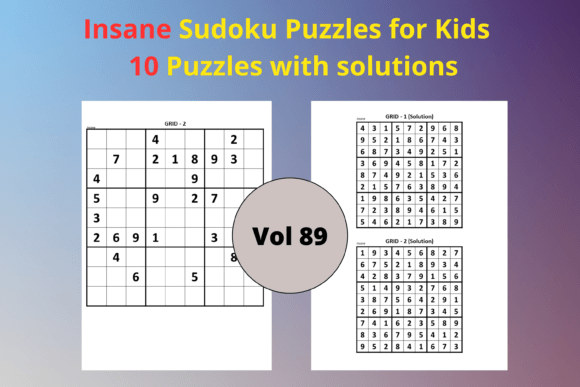
The pack includes ten unique puzzles and ten matching solution pages. That structure matters more than many people realize. When a child gets stuck, flipping to a clear, separate solution page teaches them to check their work independently rather than feeling like they failed. It builds a healthy relationship with problem-solving.
Avoiding the Most Common Formatting Oversight
One of the biggest mistakes people make when selecting printable puzzles is ignoring layout specs. You see a file labeled "PDF ready to upload" and assume it will print beautifully on any paper. Then you hit print, and the grid lines are blurry, the numbers sit too close to the edges, or — worst of all — the puzzles span two pages with awkward breaks.
The Easy Sudoku for Kids 45 interior is sized at 8.5 x 11 inches, the standard for home printers and KDP paperback formatting. Each puzzle sits comfortably on a single page with generous margins. The solutions appear on separate pages, so there is no risk of a child accidentally glimpsing the answer while still working. If you are uploading this to Amazon KDP, the trim size and bleed settings will match what the platform expects, reducing rejection headaches.
Before committing to any printable puzzle file, always confirm the page dimensions, the resolution of the grids, and whether solutions are properly separated. A poorly formatted interior can make even the best puzzle designs unusable.
The Editable File Advantage Nobody Talks About
Many puzzle packs come as a locked PDF. That works fine if you only want to print and hand out pages. But what if you want to add your brand, a classroom header, instructions in a different language, or a customized difficulty label? Without an editable source file, you are stuck.
This pack includes a PPTX file alongside the ready-to-upload PDF. That means you can open the slides in PowerPoint, Google Slides, or any compatible program and make adjustments. Change fonts, shift the grid position slightly, add a name line at the top, or insert a small motivational message. For KDP creators, this flexibility translates into faster niche customization. For teachers, it means adapting the same core puzzles for different student groups without starting from scratch.
Skipping the editable option might save you a few minutes upfront, but it costs you adaptability later. Always check whether a puzzle pack offers editable files, especially if you plan to use the content across multiple platforms or formats.
Misunderstanding "Easy" and Why It Affects the Experience
A common misunderstanding is that any Sudoku labeled "easy" works for any beginner. In practice, difficulty depends on clue placement, not just the number of empty cells. Two puzzles can each have 35 given numbers, yet one might take twice as long to solve because the missing digits require multi-step inference rather than direct elimination.
With children, this distinction matters even more. A child who encounters a supposedly easy puzzle that requires advanced scanning techniques will feel the activity is unfair. They might abandon Sudoku entirely, missing out on the logical thinking benefits. The puzzles in Easy Sudoku for Kids 45 use straightforward single-candidate and single-position solving strategies. That keeps the experience encouraging rather than punishing.
When evaluating any easy puzzle set for kids, solve the first puzzle yourself. Look for hidden singles, naked pairs, or pointing pairs. If those terms even apply, the puzzle is not truly easy for a young beginner. Trust your own solving experience over the label.
Ten Puzzles Are Enough — and Here Is Why
Some buyers chase volume, assuming more puzzles automatically deliver more value. A pack of 100 puzzles sounds impressive. But for a child who is new to Sudoku, ten well-designed puzzles with separate solution pages provide the right arc. The child finishes the set, feels a sense of completion, and asks for more. That is a much better outcome than abandoning a massive workbook halfway through.
Ten puzzles also fit neatly into a single sitting or a week of daily practice. Teachers can print a class set without burning through an entire term's worth of activities. Parents can offer one puzzle a day as a screen-free morning warm-up. The manageable quantity reduces decision fatigue and keeps the focus on quality solving time.
Practical Checks Before You Download or Upload
If you are a KDP publisher, a few extra steps ensure the interior performs well once live. Open the PDF and check every page at 100% zoom. Look for faint lines, inconsistent number sizing, or text that appears cut off near margins. Ensure the solution pages clearly correspond to the correct puzzle pages. A mismatch between puzzle and solution is a rare but serious error that leads to returns and negative reviews.
Test print at least two pages on regular letter paper. Confirm the grid prints sharply and the numbers are large enough for a child to read comfortably. Tiny numbers force kids to squint and increase the chance of misreading a digit, which turns a logic puzzle into a guessing game.
If you plan to sell the interior as part of a larger activity book, consider the overall flow. Placing all ten puzzles together followed by all ten solutions works. Alternating puzzle and solution pages also works but requires clearer labeling to prevent confusion. The included PPTX file makes reordering pages straightforward.
How This Pack Serves Educators and Creators Alike
Classroom teachers need materials that print cleanly, fill time productively, and require minimal explanation. The Easy Sudoku for Kids 45 pack checks those boxes. Print a set for early finishers, add it to a math station, or send pages home as optional weekend brain teasers. Because the difficulty is consistent, students can work independently without constant teacher intervention.
For KDP sellers and content creators, this interior offers a shortcut to a proven niche. Kids' puzzle books sell steadily, but formatting them from scratch eats hours. A clean, editable base file lets you focus on cover design, marketing, and bundling rather than grid alignment. Just remember to modify the interior enough to differentiate your product if you are using it in a competitive category.
Small Details That Improve the Solving Experience
Something as simple as a "Name:" line at the top of each puzzle page makes the sheet feel personal. You can add this in the PPTX file in under a minute. Larger margins on the left side accommodate three-hole punching or stapling without obscuring grid borders. If you are printing for a classroom, consider whether the paper type you use handles erasing well. Kids will make mistakes, and thin printer paper that tears under an eraser leads to frustration.
Also worth checking: does the font used for the numbers clearly distinguish between 6 and 9, or between 1 and 7? At smaller sizes or lower print quality, ambiguous digits cause errors that have nothing to do with logic. The standard Sudoku number fonts in this pack are chosen for clarity, but always preview at actual size.
Building a Habit, Not Just Finishing a Page
The real value of an easy Sudoku pack lies beyond the ten puzzles. It plants the seed for a thinking habit. Children learn to scan systematically, test possibilities, and recover from small errors without giving up. Those skills transfer to math, coding, and everyday decision-making. By choosing a pack that respects the child's current ability level — genuinely easy, clearly formatted, and supported by accessible solutions — you give them the best possible introduction to logical puzzle-solving.
When you compare options, look past the puzzle count and price. Look at the page size, the solution placement, the editability of the source file, and whether the difficulty label matches what you actually receive. These often-overlooked factors determine whether a puzzle pack gets used once and forgotten, or becomes a go-to resource in your classroom, home, or product catalog.