A Closer Look at Easy Sudoku for Kids 87: 10 Simple 9x9 Puzzles for Early Learners
The Appeal of Beginner-Friendly Sudoku for Children
Sudoku puzzles have long been celebrated as a quiet yet powerful way to sharpen the mind, but when the grid size and difficulty are scaled down for younger solvers, the experience transforms into an inviting playground of logic. Instead of overwhelming little learners with complex strategies, the best entry points rely on clear visual patterns and a gentle learning curve. The Easy Sudoku for Kids 87 collection understands this principle perfectly. Each puzzle in this pack is designed not as a test of advanced reasoning, but as a confidence-building exercise—one where a child can look at a partially filled 9x9 box and intuitively sense where the next number belongs. The appeal lies in the immediate sense of accomplishment. When a child places a missing 3 or 7 correctly, the brain releases a small reward, reinforcing the desire to continue. This emotional loop is why so many parents, teachers, and activity book creators turn to easy-level puzzles as a go-to resource.
Unpacking the Easy Sudoku for Kids 87 Pack: What You Get Inside
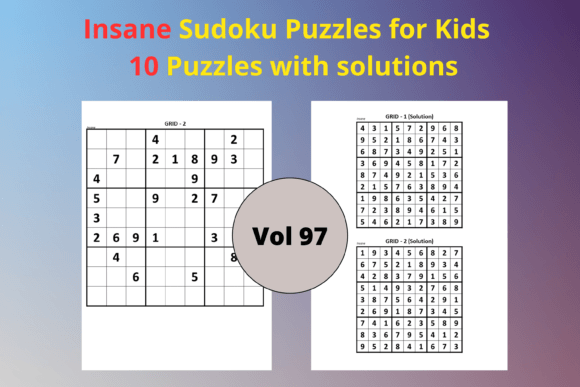
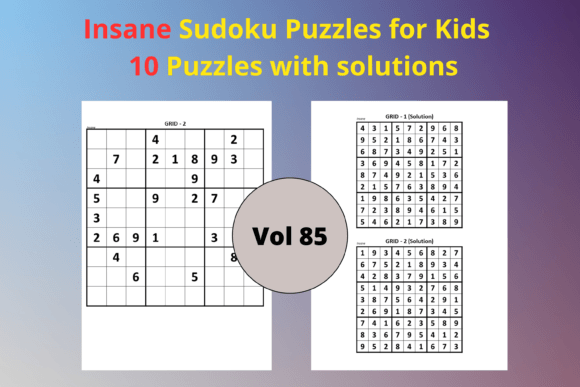
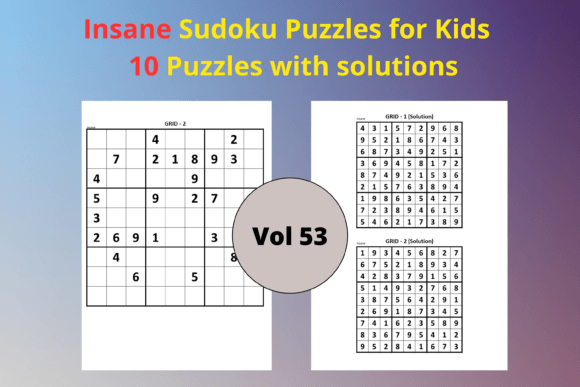
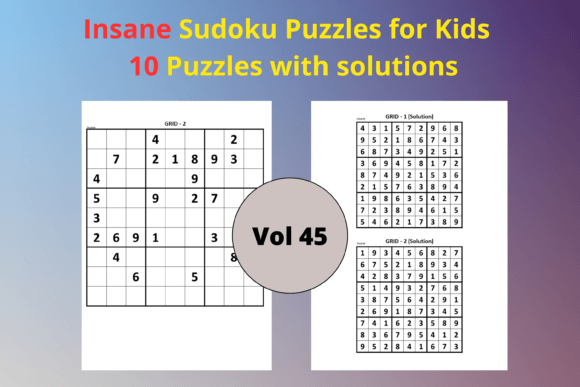
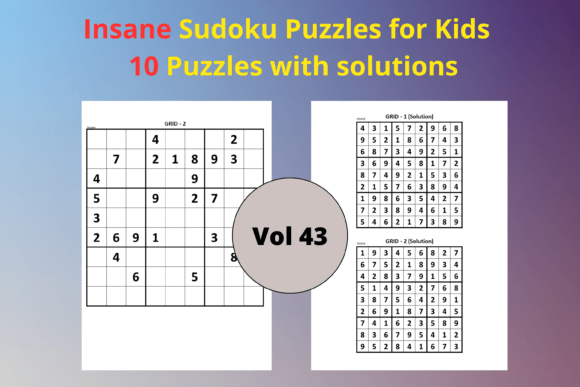
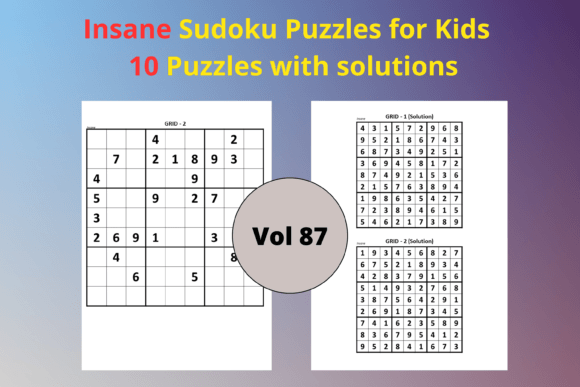
Whether you are a self-publisher looking for a ready-to-upload KDP interior or an educator searching for printable brain breaks, the contents of this pack are straightforward and immediately usable. Inside the Easy Sudoku for Kids 87 download, you receive 10 unique 9x9 Sudoku puzzles along with their corresponding 10 full solution pages. Every puzzle falls under the easy difficulty category, meaning the given numbers are generous enough that a child can solve them using only basic scanning techniques—no advanced “pencil marking” or candidate elimination required. The files are tailored for stress-free production: a PDF file that is ready to upload to Amazon KDP or any print-on-demand platform, and an editable PPTX file so you can rearrange puzzle order, add your own branding, or adjust margins. Both versions are sized at a convenient 8.5 x 11 inches, the standard letter dimension that fits perfectly into home printers, classroom binders, and trade paperback interiors. You get the puzzles and solutions as separate pages, making it effortless to compile an answer key at the back of a printed book or to hide solutions during screen-free play.
Why 9x9 Grids Are the Sweet Spot for Young Solvers
While mini 4x4 or 6x6 Sudoku variants exist for preschoolers, the classic 9x9 grid remains the benchmark that children ultimately want to master. The 87 collection uses this standard layout because it introduces the full logic structure without overwhelming novices. Each row, column, and 3x3 box must contain the digits 1 through 9 exactly once—a rule that is easy to explain yet wonderfully rich in deductive possibilities. The key that makes these particular puzzles “easy” is the density of clues. A typical puzzle from the pack might start with 35 to 40 pre-filled numbers, leaving fewer empty squares than a medium or hard puzzle. This high givens-to-blank ratio means children can often solve a puzzle by simply asking “what’s missing in this row?” or “which number hasn’t been used in this box yet?” That kind of concrete thinking builds the foundation for more abstract problem-solving later, all while keeping frustration at bay. The 9x9 size also makes the puzzles feel grown-up, which gives children a sense of pride as they transition from simpler grids to “the real thing.”
Educational Benefits That Go Beyond Entertainment
At first glance a Sudoku puzzle might look like a math activity, but the real cognitive gains are language-independent and rooted in executive function. When a child works through a page from Easy Sudoku for Kids 87, they practice sustained attention—the ability to focus on a single task without distraction. They also strengthen working memory by holding possible numbers in mind while scanning a row. Over time, these small mental workouts contribute to better pattern recognition, logical sequencing, and even spatial reasoning. Teachers report that regular Sudoku sessions can improve a student’s capacity to notice details and verify information, skills that transfer directly to reading comprehension and science observation. Moreover, the puzzles introduce the concept of constraint satisfaction: each empty cell is constrained by what already exists in its row, column, and box. Learning to navigate constraints without getting stuck develops persistence and flexible thinking. Because the easy level guarantees a solution can be reached without guessing, children experience the satisfaction of a reproducible path from start to finish—an experience that quietly teaches the value of methodical problem-solving.
How Parents and Educators Can Use These Puzzles Effectively
The versatility of the pack makes it easy to integrate Sudoku into daily routines in ways that feel natural rather than forced. At home, a parent might print two puzzles and sit beside the child with their own copy, turning it into a calm cooperative challenge. Short sessions of ten to fifteen minutes keep the activity fresh and prevent mental fatigue. In a classroom setting, the 10 puzzles can serve as a bank of early finisher tasks, morning work, or even a rotating station in a math or logic center. Because the PPTX file is editable, an educator can extract a single puzzle and enlarge it for display on a smartboard, solving it together as a group to model the thinking process. Checking answers becomes seamless with the included solution pages; teachers can project the solution or provide a printed answer key. For homeschooling families, the puzzles double as a screen-free independent learning tool that builds confidence quietly. Some children even enjoy designing their own Sudoku briefly after seeing the structure—an opportunity that the editable PPTX format readily supports if an adult wants to experiment with a blank grid.
The Advantage of Having an Editable PPTX Format
A ready-to-upload PDF is indispensable for quick publishing, but the inclusion of a fully editable PPTX file in Easy Sudoku for Kids 87 opens creative doors that a static PDF cannot. Using PowerPoint or any compatible editor, a creator can rearrange the puzzles so that the easiest of the ten appears first, gradually increasing the perceived challenge even if all remain within the easy category. You can insert your own title page, add a “This Book Belongs To” section, or include simple instructions tailored to your audience’s language and age group. Some activity book compilers prefer to intersperse Sudoku pages with other types of puzzles; the editable format makes it simple to copy and paste selected puzzles into a larger manuscript. Additionally, if you need to adjust the puzzle to fit a specific trim size, you can modify the slide dimensions. For those selling printables on platforms like Etsy or Teachers Pay Teachers, the PPTX file allows you to add branding watermarks, copyright notices, or even convert the puzzles into different color schemes to match a seasonal theme. This flexibility means the 10 puzzles serve not just as a finished product but as a creative starting point.
From Classroom Handouts to KDP Self-Publishing: Multiple Use Cases
The line between a learning resource and a commercial product blurs nicely with a well-prepared Sudoku interior. Self-publishers who specialize in low-content books can take the 10 puzzles and 10 solutions, format them into a paperback or spiral-bound activity book, and list it on Amazon KDP within a day. Because the interior is print-ready at 8.5x11 inches, there is no need to wrestle with margins or bleed settings. The clean design ensures that the puzzle grids remain crisp and readable, an essential factor for customer satisfaction and low return rates. Conversely, a tutoring center might purchase the pack merely to print unlimited copies for its students, relying on the files as an evergreen worksheet library. Children’s librarians have used similar packs to create take-home activity kits, while occupational therapists incorporate easy Sudoku into sessions that target fine motor skills (the act of writing digits) and cognitive endurance. The identical puzzle set can simultaneously sit inside an ebook for tablets, ready for on-screen solving with a stylus. The unified format adapts to the user’s intent without requiring technical expertise.
A Peek Inside One Puzzle and Its Solution
Imagine opening the PDF to the third puzzle in the pack. The 9x9 grid is centered on the page, with thick lines marking the nine 3x3 boxes for instant visual segmentation. Approximately 38 numbers are already printed in a clear, slightly bold font, leaving about 43 empty squares waiting to be filled. The solution page that follows reveals the completed grid in a satisfying orderly cascade of digits. A child encountering this puzzle might start by scanning the top-left box and noticing the numbers 2, 5, 7, 1, 9, and 6 are present; only 3, 4, and 8 remain missing. A quick glance upward shows a 4 already in the first row, so the top empty cell in that box cannot hold a 4. With similar straightforward deductions, each empty cell is resolved one by one. The solution page confirms the correct placement without any ambiguity, and the child can compare their work square by square. This simple feedback loop—puzzle, effort, solution, check—works for an entire set of ten puzzles, each puzzle subtly varying the givens distribution so that no two puzzles feel identical. That variety keeps the exercise fresh despite the recurring rules.
Designing Low-Pressure Learning with Easy-Level Logic
One subtle design choice that makes the Easy Sudoku for Kids 87 pack effective is the careful avoidance of “bottleneck” puzzles where a single difficult deduction blocks all progress. The creators of the collection have ensured that every puzzle admits a continuous solve path based on naked singles—cells where only one number is possible because the other eight are already used in the same row, column, or box. This structural guarantee greatly reduces the chance of a child becoming stuck and demoralized. The predictability of the solve path is especially valuable for children who are just learning to read or who have not yet developed strong frustration tolerance. They can rely on a repetitive but effective method: pick a box, find the missing numbers, check constraints, place a digit, repeat. As they cycle through the ten puzzles, they naturally get faster and begin to recognize recurring patterns, which is itself a form of inductive reasoning. The process builds a mental template that they will later apply to harder puzzles when ready, all without ever having encountered a single unsolvable or guess-required grid in this pack.
Building a Complete Activity Book Series with 10 Puzzles and Solutions
Creators who wish to extend the value of the pack can treat the 10 puzzles as a foundational module. By combining multiple puzzle types across different packs, they can build a larger activity book where Sudoku sits alongside mazes, word searches, dot-to-dots, and coloring pages. The editable PPTX is especially useful here, as it allows the puzzles to be spaced with other content while maintaining a consistent look. Because the pack includes exactly ten puzzles—an amount that is neither too few to feel trivial nor so many that it overwhelms a young child—it occupies the perfect volume for a dedicated Sudoku section within a broader book. When marketed on platforms like KDP, such an integrated book might be titled “Brain Games for Kids Ages 6–9” and use the Sudoku pages as the logic anchor. The transparent answer key ensures that parents reviewing a sample before purchase see the completeness of the resource, which can improve conversion on product pages. In short, the pack functions both as a standalone mini-book and as a modular component for more ambitious projects.
Integrating Sudoku Seamlessly into Daily and Weekly Routines
Rather than positioning Sudoku as an occasional novelty, many families and teachers find that weaving one puzzle into the weekly rhythm yields the most consistent cognitive benefits. Monday mornings could begin with a fresh printed puzzle from the PDF, placed on the kitchen counter or at a desk. The child works on it during breakfast or after their core lessons, and the completed page goes into a folder. By the end of the ten-week cycle, the child has a tangible record of improvement and ten small victories. The ready-to-use nature of the files eliminates the need for time-consuming prep; simply open the PDF, print the next puzzle and its solution for the answer key, and you are done. This frictionless accessibility is one of the reasons the Easy Sudoku for Kids 87 pack remains a staple for busy educators and parents alike. The combination of clear puzzles, straightforward solutions, printable flexibility, and editing freedom creates a tool that respects both the child’s developing mind and the adult’s precious time—without ever compromising on quality or the quiet joy of logical discovery.