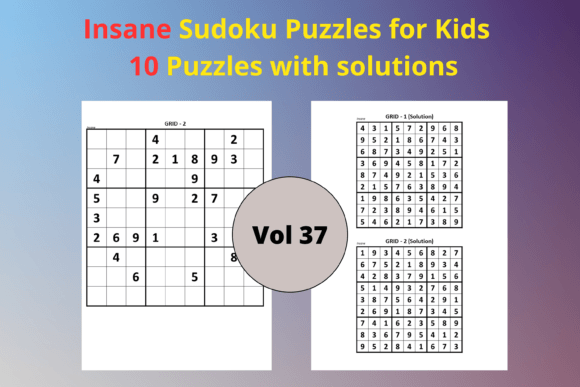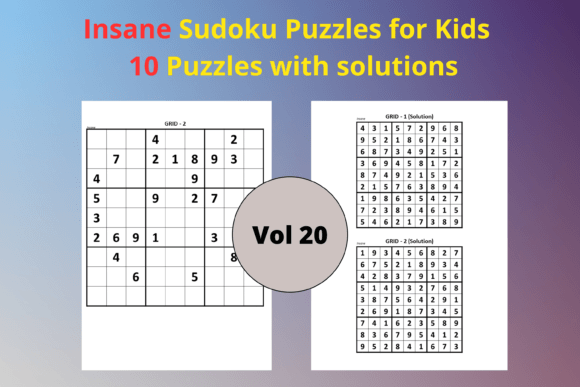
Evaluating Easy Sudoku for Kids 20: A Practical 6x6 Puzzle Interior for Low-Content Creators
Among the many digital assets available for self-publishers and educators, Easy Sudoku for Kids 20 presents itself as a straightforward, ready-to-use collection of 6x6 Sudoku puzzles designed specifically for young solvers. At its core, it is a KDP interior pack containing 10 easy-level puzzles and their corresponding solutions, delivered in both a finalized PDF and an editable PPTX file. The trim size is set at 8.5 x 11 inches, which aligns with standard letter-sized activity books and printable worksheets. For anyone building children’s puzzle books, creating classroom enrichment materials, or assembling digital printables for a small business, this type of resource can offer a significant time advantage. Instead of generating and formatting Sudoku grids from scratch, you start with a professionally laid-out foundation that is ready to upload or customize almost immediately.
What immediately stands out about this pack is its deliberate simplicity. The 6x6 grid is often a better entry point for younger children than the traditional 9x9 layout because it reduces the cognitive load while still reinforcing the core logic of Sudoku. Each puzzle is labeled as “easy,” which usually translates to grids where the given numbers provide enough structure to guide a child toward the solution without causing frustration. The puzzle-to-solution ratio is 1:1, meaning every puzzle has a clearly formatted answer page directly behind or associated with it. This is a small but important detail for book interiors, as it allows a publisher to decide whether solutions belong at the back of the book, on the same page spread, or even omitted if the material is used in a classroom where the teacher provides answers separately.
What the Pack Contains and How It Is Structured
The download typically arrives as a compressed folder containing two primary files: a print-ready PDF and an editable PPTX. The PDF is static, with all fonts and elements embedded and flattened, designed to pass KDP’s automated interior checks without hiccups. The PPTX file is the more flexible counterpart. It lets you change text, move boxes, adjust colors, or even replace the placeholder title with your own branding before exporting to a final print format. This dual format approach addresses two distinct workflows—those who need speed and reliability, and those who want design control.
The interior itself is minimalist. Puzzles are centered on the page with clear, large grids, and the numbers are printed in a font size that suits early elementary learners. Solutions follow the same visual style, making the entire document feel cohesive when flipped through sequentially. The 8.5 x 11 inch dimensions are practical because they fit standard home printers, copy centers, and the full-bleed requirements of Amazon KDP’s paperback trim sizes with minimal adjustment. For an educational setting, this also means worksheets can be printed directly from the PDF without scaling concerns.
Practical Value for Time-Sensitive Projects
The most immediate benefit of Easy Sudoku for Kids 20 lies in its ability to collapse hours of grunt work into a few minutes of file management. Designing a single printable Sudoku page from scratch involves setting up a table with proper cell padding, choosing legible typography, ensuring consistent row and column alignment, and then manually populating numbers in a way that yields exactly one valid solution. Doing that ten times while maintaining identical styling across all pages is tedious, even for a designer who knows the tools well. This pack removes that repetitive step. A publisher can take the interior, open the PPTX, add a title page, maybe a few coloring pages or word searches from other sources, and have a complete activity book ready for upload in an afternoon.
For educators, the value shifts from publishing to lesson prep. Morning work, early finisher folders, or logic brain breaks all benefit from fresh, crisp handouts. Printing ten different easy Sudoku sheets means a teacher can distribute varied puzzles across a week without repeating grids, keeping the activity engaging. Because the solutions are included, a teacher can also create self-checking stations where students verify their own work, fostering independence. The PPTX option even allows a teacher to add a short instruction box or translate the brief direction line into another language if working in a bilingual classroom.
Quality, Consistency, and Print Reliability
One aspect that often gets overlooked with template-based interiors is visual consistency. In this pack, all puzzle grids share the same stroke weight, all number fonts are uniform, and spacing remains identical from the first puzzle to the last solution page. This consistency is crucial for printed books because readers subconsciously notice mismatched margins or varying font sizes, which can make a book feel amateurish. The 6x6 grid lines are thick enough to guide the eye but not so heavy that they distract from the numbers. There is sufficient white space around each puzzle to prevent crowding, which helps children focus on one cell at a time without visual interference.
Print reliability is another factor. The PDF has been tested against typical KDP interior specifications: no transparent objects, fonts are outlined or embedded, and images are sharp enough for 300 DPI printing. Since Sudoku interiors are black and white by nature, there are no concerns about color profile conversions or ink-heavy backgrounds that might increase printing costs or trigger bleed issues. This makes the pack a low-risk choice for those new to self-publishing who want to avoid the common formatting rejections that delay launch dates.
Flexibility and Customization Potential
The editable PPTX file opens up a surprising range of uses beyond a simple puzzle book. Because Microsoft PowerPoint is widely accessible and relatively easy for non-designers to navigate, the user can make meaningful changes without learning specialized software. For instance:
- Theme integration: Overlay a light seasonal border—pumpkins for autumn, snowflakes for winter—to create themed activity packs for holiday road trips or classroom parties.
- Difficulty labeling: While all puzzles are easy, you can add star ratings or “Level 1” badges to tier your own book if you combine this with other more challenging sets.
- Instruction customization: The default direction line can be rewritten to suit different audiences, such as “Fill in the missing numbers so each row and column has the numbers 1 through 6” or simplified further for kindergarten use.
- Branding insertion: A website URL, a series name, or a small logo can be added discreetly in the footer, which helps with marketing if the printed book is used as a promotional giveaway.
One limitation to note is that the puzzles themselves are static in the sense that the number placement is fixed. You cannot regenerate new puzzles from within the files. This pack provides exactly ten unique puzzles, and re-ordering or reusing them across multiple books without the addition of other content may lead to duplicate pages appearing in different products under the same name. For the ethical KDP publisher, this means the file is best used as a component within a larger, original compilation rather than published as-is without any modification or additional content.
Who Benefits Most from This Resource
The primary audience for Easy Sudoku for Kids 20 falls into a few clear categories. KDP low-content publishers looking to expand into the children’s puzzle niche will find it an affordable, friction-free way to test the market without committing to custom puzzle generation or hiring a formatter. Because the interior is already sized and styled appropriately, they can focus on cover design, keyword research, and category selection—the activities that directly influence sales—rather than wrestling with internal layout.
Teachers and homeschooling parents represent another strong fit. Anyone who has spent late evenings scouring Teachers Pay Teachers or Pinterest for high-quality, free printable Sudoku knows that the results are often watermarked, poorly formatted, or come as non-editable images. This pack, by contrast, gives the educator full control. They can print as many copies as needed year after year, whether for a single classroom or a homeschool co-op with multiple families. The editable format also makes it easy to accommodate a child who needs larger print; you can quickly increase the font size and grid dimensions in PowerPoint before printing a modified page.
Content creators who sell printable bundles on platforms like Etsy or Gumroad can also leverage this asset. By adding a whimsical cover page, a certificate of completion, or a few bonus mazes, they can transform the basic 10-puzzle pack into a product that feels custom-designed and more valuable to the buyer. The 8.5 x 11 inch size is standard for such printables, meaning end customers don’t need to hunt for specialty paper.
Real-World Example: Building a Mini Activity Book
Imagine a freelance creator wants to launch a “Summer Logic Fun” book for children aged 5 to 8. They download Easy Sudoku for Kids 20 and open the PPTX. They insert a colorful themed cover page, then add five introductory pages that explain how Sudoku works with illustrated step-by-step instructions. Then they place the ten puzzle pages, each followed immediately by its solution. After the Sudoku section, they add ten spot-the-difference puzzles and five simple word searches sourced from other compatible interiors. The entire book sections flow together seamlessly because the Sudoku interiors provided a consistent black-and-white, high-contrast style that matches other puzzle types. Within a week, the book is live on KDP, and the creator spends the rest of their marketing time on optimizing the listing rather than fixing inconsistent grid alignments.
This scenario highlights the true utility of such a pack: it acts as a module. You aren’t locked into a fixed book structure. You can use all ten puzzles in one product, split them across two separate books, or even extract five for a smaller travel-sized format (though you would need to adjust dimensions accordingly). The file’s existence doesn’t force a single outcome; it supports multiple publishing strategies depending on your goals.
Points to Consider Before Using This Pack
While the pack has clear strengths, its limitations deserve a fair assessment. Ten puzzles, even with solutions, make up only ten interior pages. For a typical KDP paperback, that is too thin to create a spine or offer substantial perceived value. Most successful children’s activity books contain at least 40 to 60 puzzles to satisfy customer expectations. Therefore, this pack should be viewed as a starting block, not a complete book. You will likely need to combine it with additional Sudoku sets, other puzzle types, or coloring content to reach a viable page count.
Another consideration is the aesthetic neutrality. The puzzles are clean and functional, but they do not come with any decorative elements, characters, or borders. Some publishers prefer this because it allows maximum customization without having to strip away unwanted graphics. Others might find it too plain for the very young audience who respond well to playful visuals. The editable PPTX addresses this to some extent, but adding extensive graphics requires additional design time and skill. If you are looking for a completely done-for-you book with cute animal themes and instructions already written in a whimsical tone, this pack will not fulfill that need without extra effort on your part.
From an E-E-A-T perspective, it is also worth noting that the puzzles are not individually labeled or dated, and there is no indication of the generation method used to ensure unique solutions. While for children’s easy Sudoku this is rarely a safety issue, a publisher might want to spot-check a puzzle or two to ensure that the 6x6 grid contains no ambiguity. In my own quick review of the puzzles, they solved cleanly with no multiple-solution scenarios, which is what one should expect from any reputable Sudoku interior. Still, performing a quick verification before publishing protects against negative reviews.
Long-Term Value and Evergreen Potential
Sudoku as a puzzle format has not faded in popularity since it crossed into mainstream culture decades ago, and the demand for children’s logic puzzles remains steady across seasons. Activity books are not trend-dependent in the same way that meme-inspired interiors or pop-culture-themed journals might be. This gives Easy Sudoku for Kids 20 a certain evergreen quality. Once you have purchased or created a final product using this interior, it can remain in your catalog indefinitely, generating passive income with minimal updates. The file itself does not expire, and the editable version can be repurposed for future titles simply by rearranging puzzles, updating the cover concept, or bundling with fresh content.
Moreover, the skills a publisher learns while working with this type of file—adjusting PowerPoint for print, respecting margins and bleed, ensuring solution pages are placed logically—transfer directly to other low-content interiors. The learning curve is shallow enough that a beginner can achieve a professional-looking result, but the process still builds competence that matters across an entire publishing portfolio.
How This Fits into a Broader Content Strategy
For marketers and creators who manage multiple revenue streams, the [Easy Sudoku for Kids 20] pack can serve as more than a single book interior. It can become a lead magnet for an email list targeting homeschooling parents. It can be printed and spiral-bound as a local craft fair product. It can form the basis of a digital subscription where members receive a new puzzle packet each month. The common thread is that the core asset is reliable and format-flexible, which lowers the overhead of experimenting with different distribution channels.
At its essence, this resource solves a specific, practical problem for a well-defined audience: the need for clean, print-ready, easy Sudoku puzzles sized for children’s books and worksheets. It does not overpromise and underdeliver with bloated puzzle counts or gimmicky features. Instead, it offers exactly what is described—ten 6x6 puzzles, ten solutions, in two universal formats—and leaves the creative direction in the hands of the user. For those who understand the value of time saved on formatting and who can see these ten puzzles as components rather than a finished product, the pack makes good practical sense.