Easy Sudoku for Kids: A Closer Look at 10 Sturdy 6×6 Brain Builders
Picture a puzzle that feels less like a test and more like a friendly game of hide-and-seek with numbers. That is exactly what a well-designed easy Sudoku puzzle offers young learners, especially when the grid shrinks to a manageable 6×6 format. In a world overflowing with digital distractions, these pocket-sized logic challenges deliver a rare blend of calm focus and genuine accomplishment without ever overwhelming a child. Whether you are a parent searching for a quiet afternoon activity, a teacher stocking a classroom resource corner, or a KDP publisher building a new book of children’s activities, a set of 10 easy Sudoku puzzles with solutions can become a surprisingly versatile tool.
Why 6×6 Sudoku Signals a Turning Point for Young Puzzlers
Traditional 9×9 Sudoku grids, even at an easy level, demand a sustained attention span and a grasp of multiple elimination strategies that many kids simply do not develop until later elementary years. A 6×6 grid strips away that complexity without stripping away the core logic. Instead of nine numbers, children work with digits 1 through 6, or sometimes playful symbols or colors if you choose to adapt the templates. This smaller range reduces cognitive load, letting a child focus entirely on the reasoning process: “This row already has a 2 and a 4, so what’s missing?” The brain learns to scan, compare, and place with confidence.
Research into early childhood numeracy often points to the value of non-routine problem solving. A 6×6 Sudoku, especially one crafted at an easy level, offers exactly that. The child is not practicing arithmetic; they are internalizing concepts like constraints, exclusion, and sequential reasoning. Every correctly placed number reinforces the idea that persistent thinking pays off. For kids who might shy away from traditional math drills, this format feels like a secret decoder ring rather than a worksheet.
Inside a Carefully Compiled Set of 10 Puzzles and Solutions
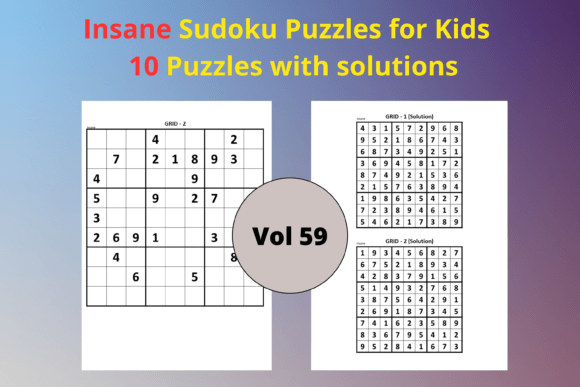
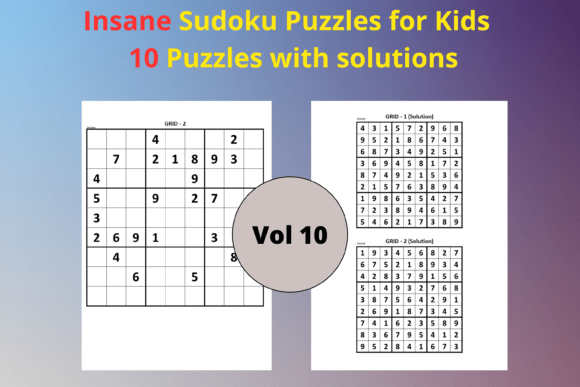
Not all activity pages are created equal, and the difference becomes glaringly obvious when you print a poorly designed Sudoku grid. The specific collection referred to here—often called Easy Sudoku for Kids 10 for convenience—was built with both the child and the layout user in mind. It includes 10 distinct 6×6 puzzles and a matching set of 10 fully solved answer grids. Every puzzle sits at that sweet spot where a beginner can finish it without frustration, yet still needs to slow down and think. The solutions are not an afterthought; they are printed clearly so that a child can self-check, or a parent can provide a quick hint without firing up a separate app.
The included files come in two practical formats: a ready-to-upload PDF and an editable PPTX (PowerPoint) version. Both are sized at 8.5 x 11 inches, the standard letter size that slips easily into binders, homework folders, and spiral-bound activity books. Having both formats means you can print them instantly at home or send the PDF straight to a professional printer, while the PPTX lets you rearrange puzzles, tweak fonts, add a child’s name, or even swap numbers for thematic icons—pumpkins in October, snowflakes in December—before printing.
The Quiet Power of a PDF–PPTX Combination
A static PDF is perfect for straightforward printing, but the editable PPTX unlocks creative possibilities that many parents and educators overlook. Suppose you run a small tutoring center and want to brand each page with your logo. Open the PPTX, drop in your visual identity, and export a fresh PDF. If you are a KDP content creator, you can blend these 10 puzzles with other activity pages—mazes, coloring sheets, word searches—to build a unique full-length book interior without starting from scratch. The 10 puzzles and solutions act as a reliable core module that slots into countless projects.
Teachers in particular appreciate the layer of flexibility. A preschool educator might copy a puzzle from the PPTX, enlarge it, and use it as a floor game during circle time. A fourth-grade teacher could assign one puzzle per day as a warm-up, printing the solutions separately for her own reference. Because the 6×6 easy level is so accessible, these puzzles become a tool for cross-age group activities, buddy systems, and even family game nights where older siblings guide younger ones.
What Makes Easy Sudoku a Genuine Learning Accelerator
It is tempting to label Sudoku as simply “number placement,” but the mental scaffolding it provides runs deeper. When a child scans a row, column, and 2×3 subgrid (the typical block arrangement in a 6×6 Sudoku) simultaneously, they are practicing divided attention and working memory. They hold a piece of information—“I need a 5 here”—while searching for conflicting digits elsewhere. That juggling act strengthens executive function skills, the same ones that help with following multi-step instructions, planning a story, or even organizing a backpack.
Another often-overlooked benefit is error tolerance. An easy Sudoku, by design, rarely leads to an unsolvable dead end if a child makes a mistake; the grid typically still allows a gentle correction. This creates a low-stakes environment where wrong guesses become clues rather than failures. Kids learn to backtrack without shame. In a classroom where test anxiety can stifle risk-taking, a 6×6 puzzle acts as a safe sandbox for trial-and-error learning.
Additionally, the self-contained nature of a 10-puzzle set promotes a sense of progression without the weight of a 200-page workbook. A child can see the stack of 10 easy Sudoku puzzles and think, “I can do these.” Finishing the stack becomes a short-term goal that delivers a satisfying milestone—perhaps a certificate the parent can create using the editable PPTX—before moving on to more challenging material.
Practical Ways to Blend These Puzzles Into Everyday Routines
One of the strengths of a modest collection like this is how naturally it slots into daily life without demanding a formal “math time.” Here are several scenarios where the pages find repeated use:
- Restaurant waiting periods: Tuck a few printed sheets into a bag. The 8.5 x 11 size folds neatly, and a puzzle holds attention far longer than a coloring page.
- Morning mindfulness: Swap one frantic worksheet for a Sudoku page. Children ease into the day with quiet logic instead of noisy repetition.
- Travel activity folders: Combine the puzzles with a plastic sheet protector and a dry-erase marker. The same set can be reused on road trips, reducing waste.
- Multi-age homeschooling: While an older child tackles multiplication, a younger sibling works beside them on a 6×6 puzzle, feeling equally productive.
Because the solutions are provided on separate pages, a child can work independently, then flip to the back to verify their answer. This simple act of self-checking builds metacognition—the habit of asking, “Did I get it right, and if not, where did my thinking veer off?”
How Creators and Publishers Use the Pack as a KDP Interior Foundation
For those building low-content books for Amazon KDP or similar platforms, a Easy Sudoku for Kids 10 pack solves a persistent headache: the need for cleanly formatted, print-ready puzzle pages that do not look like they were spat out by a generic generator. Each of the 10 puzzles in this set is arranged with careful spacing, large enough cells for a child’s pencil strokes, and unambiguous grid lines that remain crisp after printing. The accompanying solutions share the same grid quality, so the answer section looks polished, not mismatched.
The editable PPTX file becomes an inventor’s toolkit. A publisher might duplicate the slides, replace the numbers with simple emojis, create a “Symbol Sudoku” bonus section, and immediately increase perceived value without hiring a designer. Others use the PPTX to add instructions in multiple languages, catering to a wider market. Because the base content is already created and formatted in the correct trim size (8.5 x 11 inches), you sidestep the painful trial-and-error of margin adjustments that frequently derail first-time self-publishers.
Even beyond KDP, the pages work beautifully for printable Etsy shops, classroom resource subscriptions, and after-school program activity banks. The license typically allows redistribution in a modified product, which means you can use these 10 puzzles and solutions as a component of a larger paid offering, provided you check any specific terms associated with your purchase.
Design Elements That Keep Young Solvers Engaged
Walk through a children’s puzzle section and you will quickly notice that visual clutter is the enemy of concentration. In this easy Sudoku set, the 6×6 grids use generous white space and a clear numeral size that does not strain young eyes. The border between the 2×3 subgrids is slightly bolder than the cell lines, subtly training the eye to recognize the block structure. That visual cue matters more than we often admit; it transforms the puzzle from an intimidating lattice into a manageable collection of smaller zones.
The PDF version is optimized for crisp black-and-white printing, so a $50 home laser printer produces pages that look professional, not muddy. The PPTX includes editable text boxes, meaning you can adjust the font for the title or completely rephrase the header to something like “My Morning Brain Booster” or “Sudoku Challenge: Can You Finish All 10?”. This small customization can make a significant difference in a classroom where personalization drives engagement.
Why Solutions Pages Deserve Their Own Spotlight
All too often, answer keys appear as a cramped, tiny grid that frustrates anyone trying to match it against their work. The solutions in this pack are printed at the same size as the puzzles, one answer per page. A child can lay their completed grid side by side with the solution and visually scan for differences. For a parent or teacher, this eliminates the squinting and the inadvertent “Wait, which number is that?” moment. It may seem like a minor detail, but in a busy environment—a noisy classroom, a dimly lit restaurant—clarity is everything.
Adapting the Easy Level for Different Age Bands
An “easy” label does not automatically fit every child. A five-year-old encountering Sudoku for the first time might need an adult to read the instructions aloud and demonstrate one puzzle together. A seven-year-old with a solid grasp of counting and patterns might tear through the first few puzzles, building momentum, and then naturally slow down on the later ones as the starting givens become slightly sparser. The beauty of a compact set of 10 is that it never outstays its welcome; before boredom sets in, the child has proven to themselves that they can complete something whole.
Educators working with children who have learning differences have found that the easy 6×6 format, especially when printed on colored paper or inserted into a dry-erase pocket, reduces visual stress. The grid’s predictable structure and the limited digit set create a soothing routine. One special education teacher described using these puzzles as a “calm-down corner” activity: a child who feels overwhelmed by language-heavy tasks could retreat to a Sudoku, succeed quietly, and return to the main lesson with renewed self-esteem.
Maximizing Longevity Through Smart Printing and Reuse
Because the PDF is a standard 8.5 x 11 inch file, you can experiment with different printing setups. Print four puzzles per page via your printer’s multiple-page setting, slice them into quarter sheets, and staple a tiny booklet—suddenly the collection becomes a take-home pocket guide. Laminate the full-size sheets and let siblings pass them around during long car trips. The PPTX gives another option: you can delete the original number clues and insert new ones, effectively creating fresh puzzles from the same grid template, stretching the pack far beyond its initial 10.
Parents who like to track progress sometimes use the solutions creatively: they cover a solution with a sticky note, reveal one row at a time as a hint system. “Let’s peek at just the top row.” This graduated hint approach keeps children thinking rather than simply copying answers, preserving the puzzle’s educational integrity while preventing meltdowns.
Building a Collection Without Overwhelming the Child
A common pitfall in children’s activity publishing is the “more is better” assumption. A 100-puzzle book can feel daunting; a 10 easy Sudoku puzzles set feels conquerable. For a child who has never finished an entire workbook, completing the last puzzle in this collection becomes a celebrated first. That confidence often sparks a genuine interest in logic puzzles, setting the stage for larger grids, different puzzle types, and a lifelong comfort with methodical thinking.
In a broader sense, this pack embodies what many parents and educators are searching for right now: screen-free, substantial, and straightforwardly useful resources. It does not require an app, a subscription, or a specialized printer. It downloads, it prints, and it works. Whether you are assembling a birthday party activity corner, building a new KDP title, or simply want to watch a child’s brow furrow in concentration and then smooth into a smile of accomplishment, the value rests in that quiet, real-world moment.