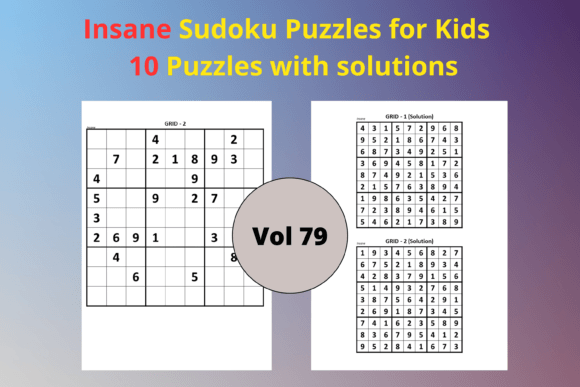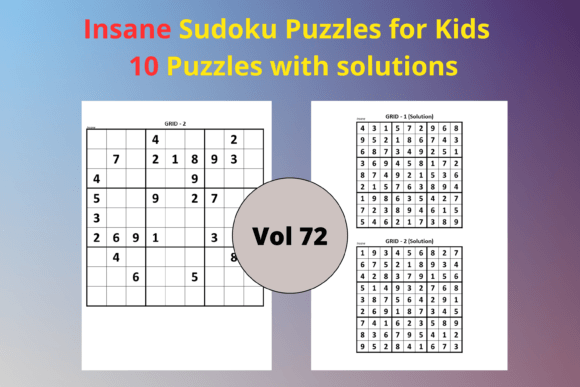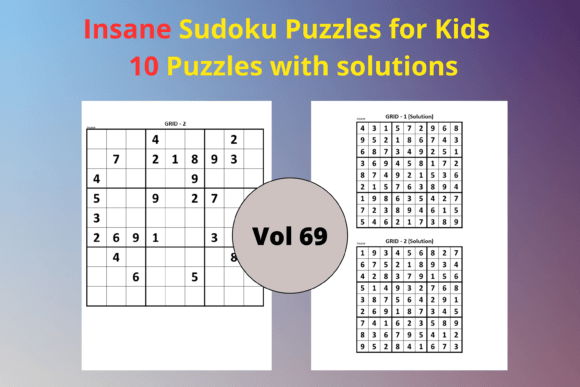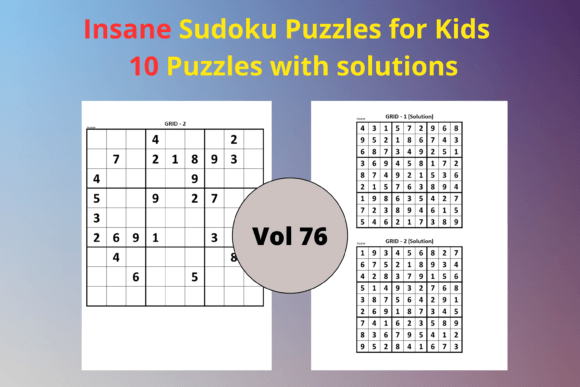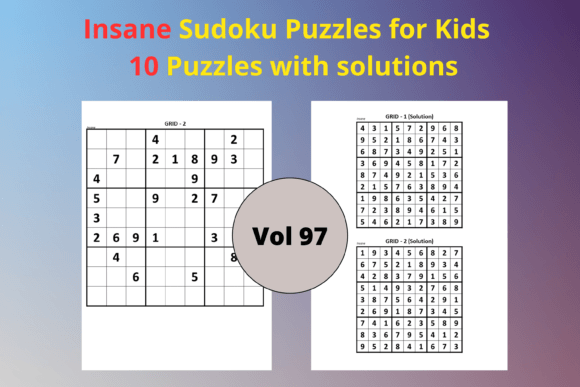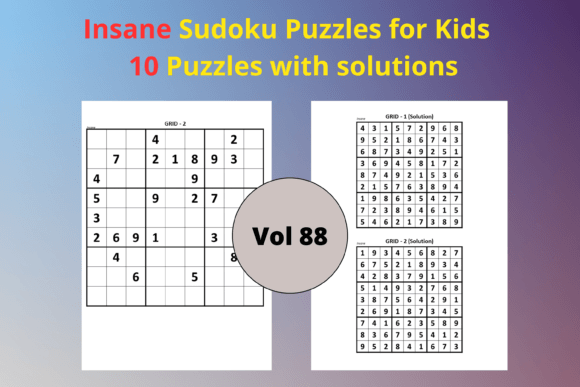
Easy Sudoku for Kids 88: A Practical Resource for Children’s Puzzle Books and Printable Activities
Finding clean, well-structured puzzle interiors that require minimal adjustment before publishing can be a genuine time-saver for activity book creators, educators, and parents running small printable shops. Easy Sudoku for Kids 88 falls into that category of ready-to-use assets. It is essentially a compact KDP interior pack containing ten 9x9 Sudoku puzzles at an easy difficulty level, paired with ten corresponding solution pages. The files arrive in both PDF and editable PPTX formats, sized at 8.5 x 11 inches, which covers the standard letter-size print format common across Amazon KDP and most home printers. This article examines what the set offers, where it performs well, and which types of buyers may gain the most practical benefit from it.
What Exactly Is Included in the Pack
At its core, the product is a lean puzzle collection aimed at children. The grid format uses a 9x9 layout, which is the classic Sudoku structure most people recognize. The “easy” designation signals puzzles with a higher number of pre-filled cells, reducing guesswork and making them suitable for young solvers who are still building logical reasoning skills. Each puzzle has its own dedicated solution page, placed in a sequence that makes it straightforward to navigate if you are assembling a printed book. The file types are particularly relevant for KDP publishing. The PDF version is print-ready, meaning you can upload it directly without worrying about font embedding or layout shifts. The PPTX file allows customization—you can adjust colors, add branding, insert instructions, or rearrange pages if needed.
What separates a set like this from a generic free puzzle generator download is the deliberate formatting for commercial use. The pages are not cluttered. Grids are clearly drawn. Numbers appear in a consistent, readable font size. There is ample white space around each puzzle, which matters when children are writing numbers inside small cells. The solutions are printed in the same grid format, making it easy for a child or parent to cross-check answers without confusion.
Why an Easy-Level Sudoku Set Still Has Value
Some might assume that “easy” Sudoku holds limited appeal, but that underestimates how many parents and teachers look for frustration-free logic activities. For a 6- to 9-year-old encountering Sudoku for the first time, the experience needs to feel achievable. If a puzzle is too difficult, a child may abandon it entirely. Easy Sudoku for Kids 88 addresses this by providing puzzles that introduce the mechanics of row, column, and 3x3 box constraints without overwhelming the solver. The patterns are simple enough that a child can learn to scan rows and identify missing numbers step by step, building the foundational reasoning that harder puzzles later require.
From an educator’s perspective, this type of content works as a warm-up activity, a calm-down exercise after more demanding tasks, or a quiet independent work option for early finishers. The “easy” level also suits older adults with cognitive decline, occupational therapy sessions, or beginner-level brain training contexts. While the product title says “for kids,” the practical audience extends further. The key is matching the difficulty to the user’s comfort zone, and this set fits a specific, often-requested beginner tier.
Print-Ready PDF Reliability
Anyone who has uploaded a KDP interior knows that small formatting errors can trigger rejection or poor print results. The PDF in this pack appears to be generated with standard print requirements in mind. Margins are consistent, no elements bleed off the page unexpectedly, and the document uses a flat, high-contrast black-and-white design that reproduces cleanly on cream or white paper. There is no color dependency, which lowers printing costs and eliminates grayscale conversion issues. Each puzzle sits centered on an 8.5 x 11 inch page, so when the book is opened, the layout feels intentional rather than squeezed or misaligned.
Editable PPTX for Customization
Including a PowerPoint file adds flexibility that a standalone PDF cannot offer. You might want to add a name line at the top of each page, insert a small logo, change the title header, or reorder puzzles and solutions to fit a different book structure. The PPTX format makes those edits accessible even for users with basic software skills. For sellers who create themed activity books—say, a dinosaur Sudoku book or a unicorn puzzle collection—the editable file serves as a foundation layer. You can overlay decorative elements, change borders, or duplicate pages to expand the puzzle count without rebuilding grids from scratch.
Practical Observations on Usability
With only ten puzzles and ten solutions, the page count sits at twenty interior pages plus any added front or back matter. This is a modest count, which makes the set best suited as a section within a larger activity book rather than a standalone Sudoku book on its own. Many KDP authors combine multiple puzzle types—word searches, mazes, dot-to-dots, and Sudoku—into a single volume. Easy Sudoku for Kids 88 integrates easily into that kind of compilation. The puzzle count is low enough that you can pair it with other content without creating an overly thick workbook, yet substantial enough to give children multiple rounds of practice before the book runs out of Sudoku material.
One limitation to note is that ten puzzles may feel brief for a child who enjoys Sudoku and solves them quickly. If you plan to position your book as a dedicated Sudoku workbook, you would likely need to supplement with additional puzzles or purchase multiple packs. The pack’s name “88” might initially suggest a larger quantity, but the actual count is clearly stated as ten puzzles and ten solutions. Buyers should weigh whether the editable template’s convenience justifies the quantity for their specific project scope.
Who Benefits Most from This Resource
The profile of an ideal user includes several overlapping groups. First, there are KDP low-content and medium-content publishers who want proven puzzle layouts without hiring a designer or building grids manually in spreadsheet software. For them, the time saved on formatting alone often covers the cost, especially when launching multiple titles or testing new niches. Second, teachers and homeschool parents who need printables for classroom use will find the clean design easy to photocopy or laminate. The lack of distracting clip art keeps the focus on the logic task, which aligns well with Montessori and other minimalist learning approaches.
Third, occupational therapists and senior activity coordinators can repurpose the easy-level puzzles for adult beginners, particularly in settings where complex puzzles might cause frustration. The large format and generous cell size also accommodate users with fine motor challenges. Fourth, freelance graphic designers and content creators who build custom activity books for clients can use the PPTX file as a base template, speeding up project turnaround. The editable format supports rapid iteration when client feedback requires small layout changes.
Comparing This Set to Alternative Options
There are many Sudoku generators available online, some free, that can produce infinite puzzles. The trade-off is that generated puzzles often lack consistent formatting, may include oddly shaped grids, or require significant post-processing to become print-ready. Easy Sudoku for Kids 88 removes that friction. The puzzles are pre-checked for solution accuracy and formatted uniformly. For someone who values reliability over volume, that curation matters. The inclusion of an editable file alongside the PDF also distinguishes it from many single-format puzzle packs on marketplaces.
On the other hand, a buyer who needs hundreds of puzzles for a thick Sudoku-only book might find ten puzzles insufficient and would be better served by a generator tool that outputs bulk puzzles in a structured template. This pack is not trying to compete on volume. Its value proposition centers on polish, editability, and immediate usability for a specific easy-level children’s niche.
Long-Term Considerations and Reusability
Once you have the PPTX file, you can reuse the layout structure across multiple projects. The grid design can serve as a master template for future puzzle books, even if you source additional puzzles elsewhere. You are not locked into a single use case. This makes the resource function more like a design asset than a one-off puzzle sheet. For someone building a brand around children’s educational content, having a consistent visual style across different book interiors strengthens recognition. The clean, no-nonsense design of this set adapts to various themes without clashing with decorative elements you might add later.
A practical example: a publisher creates a “Summer Brain Games” activity book and uses this Sudoku set alongside beach-themed coloring pages and simple crosswords. The neutral puzzle design blends without competing visually. Next season, the same publisher uses the PPTX template again for a “Winter Warm-Up” book, swapping out the cover theme but maintaining internal consistency. The reusability factor adds long-term efficiency beyond the initial ten puzzles.
Potential Limitations to Evaluate Before Buying
- Puzzle count is modest. Ten puzzles may not carry a full book. Factor in whether you need to purchase additional puzzle packs or supplement with other activity types.
- No progressive difficulty curve. All puzzles are at an easy level, which suits beginners but may not grow with the child’s skill. If your audience includes children who advance quickly, consider pairing this with medium-level content.
- Minimal instructional content. The pack focuses on puzzles and solutions. If your book requires a “How to Play Sudoku” guide page for kids, you will need to create or source that separately.
- Black-and-white only. While this is a strength for print cost, it might feel plain for some children’s products. Color accents, if desired, must be added through the PPTX file.
How to Integrate This Pack into a Cohesive Book Project
If you are building a KDP activity book from scratch, a practical workflow might look like this: Start by outlining your book’s structure—decide how many pages you want total and the mix of activities. Insert these ten Sudoku puzzles as one chapter or intermittent break pages between other puzzle types. Use the PPTX file to add consistent headers, page numbers, and any child-friendly instructions like “Fill in the missing numbers so each row, column, and box has the numbers 1 through 9.” Group the solutions at the back of the book or place each solution immediately after its puzzle, depending on your preferred layout style. Export the final file as a PDF from PowerPoint, double-checking that fonts embed correctly and margins remain intact.
For printable Etsy shops or teacher resource stores, the standalone PDF can be sold as a digital download with minimal modification. Since the file is print-ready, you can list it quickly. Adding a cover image and product description explaining the age range and difficulty level is often enough to get started. The editable PPTX also enables you to brand the pages with your shop name or website URL before selling, which helps with repeat customer recognition.
Final Observations on Practical Fit
Easy Sudoku for Kids 88 is best understood as a focused, well-organized puzzle template rather than an exhaustive puzzle library. Its strength lies in the quality of formatting and the dual-file flexibility that suits both direct upload and creative customization. For a KDP publisher testing the children’s puzzle niche, it provides a low-risk starting point. For an educator or therapist, it delivers a clean printable activity without visual noise. The easy difficulty level hits a sweet spot that many activity books overlook in favor of broader age ranges, making this a targeted tool for early elementary learners. If your project needs a modest, professionally formatted Sudoku section and you value the ability to edit and adapt, this pack aligns with those requirements without overpromising on scale.