Easy Sudoku for Kids 66: A Ready-to-Use Puzzle Set for Creative Grown-Ups
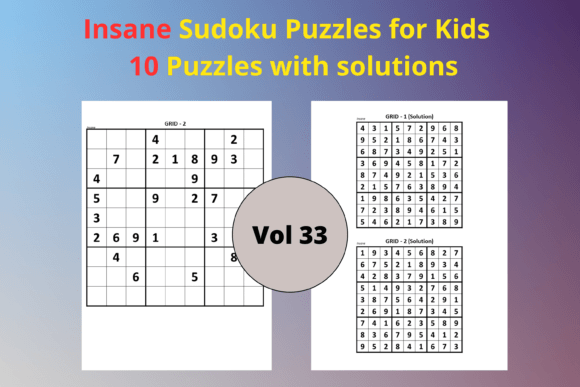
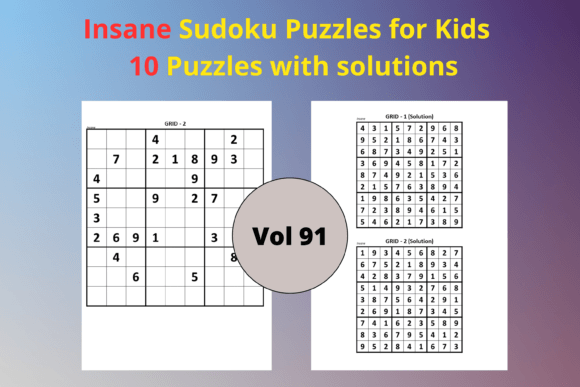
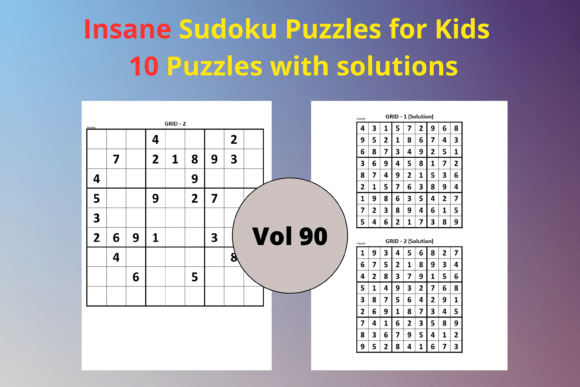
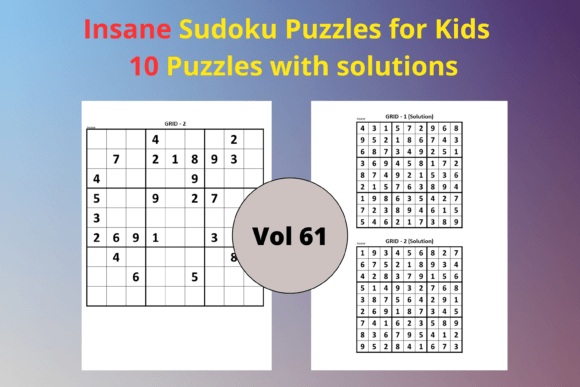
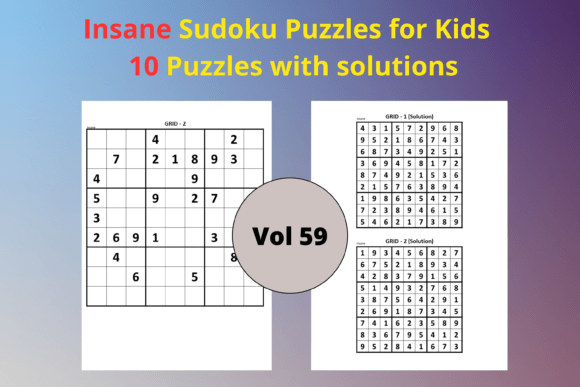
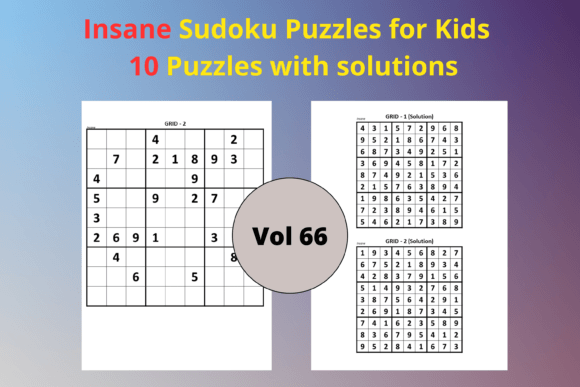
There’s a quiet kind of magic that happens when a child solves a puzzle without any help. The pencil hovers, the numbers click into place, and suddenly a grid that looked like a jumble makes perfect sense. Easy Sudoku for Kids 66 bottles that moment and hands it to parents, teachers, activity book designers, and small business owners in a clean, printable format that needs almost no extra work. It’s not a curriculum or a game app—it’s just ten carefully laid-out 9×9 sudoku grids with matching solutions, wrapped in a single PDF and an editable PPTX file, sized at 8.5 by 11 inches, and created specifically for young solvers.
What’s Actually Inside the Pack
This pack isn’t trying to be a giant workbook. It delivers exactly what it promises: 10 easy-level sudoku puzzles and 10 solution pages, each one set on a classic 9×9 grid with large, kid-friendly cells. The numbers are clear, the spacing is generous, and the solutions sit on their own separate pages, so you can decide whether to include them in a booklet or keep them as an answer key tucked away. Because the files come as both a ready-to-upload PDF and an editable PPTX, you’re not locked into the original design—you can tweak fonts, add a name, drop in a logo, or even translate the tiny instruction line at the top into another language. The print size, 8.5 by 11 inches, matches standard home printers and KDP trim requirements, which means no resizing headaches.
Why a Parent Might Reach for This First Thing on a Saturday Morning
Weekend mornings can turn chaotic fast. A parent pours a coffee, looks at the weather, and realizes the park is out. This is where a printed stack of Easy Sudoku for Kids 66 slides across the kitchen table and suddenly the room goes quiet. The easy level means a seven-year-old can sit down with only a quick explanation of the “no repeats in a row, column, or box” rule, and within minutes they’re working independently. For an older sibling who struggles with math anxiety, easy sudoku acts as a brain warm-up that feels like play instead of homework. Parents can print multiple copies, let each child pick a page, and even turn it into a relaxed competition—who finishes first with the correct numbers? The solutions are there to settle disputes without an adult having to trace every single cell.
Travel is another natural home for these puzzles. Fold a few sheets into a busy bag alongside colored pencils and a clipboard, and you’ve got a restaurant wait-time activity that doesn’t involve a glowing screen. Because the puzzles are 9×9, they challenge kids just enough without becoming frustrating, and the sense of completion often fuels a request for “one more, please.”
The Classroom Tool That Runs Quietly in the Background
Teachers keep a drawer of tricks for the in-between moments—when a lesson finishes five minutes early, when a substitute needs a ready-made activity, or when a student puts their head down and declares, “I’m done.” Easy Sudoku for Kids 66 fits that drawer perfectly. Print a stack once, slice the pages with a paper cutter, and you’ve got an instant early-finisher bin. No internet connection required, no lost game pieces. Because the puzzles are easy, they invite participation from the whole class, including students who sometimes struggle with number-based tasks. A fourth-grade teacher might use them during morning soft starts to ease into the day, while a special education instructor could mix them into a rotation that builds logical reasoning without reading-heavy instructions.
There’s also something subtle that happens socially. Kids peek at each other’s grids, ask for a pointer, and occasionally team up to find the missing 4. It’s collaborative problem-solving disguised as a solo activity, and the solution pages let students self-check, which builds trust and cuts down on “Is this right?” interruptions.
Turning a 10-Puzzle Pack into a KDP Activity Book
Self-publishers who create low- and medium-content books on Amazon KDP know that speed and polish matter. This pack gives you 10 puzzles with solutions already formatted to 8.5 by 11 inches, which means you can drop them straight into a book interior, add a cover, and hit publish within an afternoon. The editable PPTX file adds another layer of flexibility: change the header to “Volcano Sudoku” for a dinosaur-themed book, recolor the borders to match a mermaid palette, or embed the puzzles into a larger collection alongside mazes, coloring pages, and word searches. Because the sudoku grids are 9×9 easy level, they appeal to the kid activity niche—a category that consistently performs well—without requiring the complexity of medium or hard puzzles that might turn off younger solvers.
Some KDP creators use the PPTX to add a name block at the top, “This book belongs to ______,” and then duplicate the puzzle pages to create a volume that feels personalized. Others pair the puzzles with simple reward certificates at the back, printed on the solution-less pages. With the PDF ready to upload, there’s no wrestling with formatting quirks right before the deadline.
Editable Means Endless Custom Touches
The fact that the PPTX file is editable opens doors that a static PDF doesn’t. Imagine a grandparent designing a unique birthday gift: the puzzles are copied, the child’s name is inserted into the footer, a short message appears at the top—“Puzzles for Leo, Age 7”—and suddenly a generic page becomes a keepsake. Print shops, daycares, and after-school clubs can brand the sheets with their own logo and use them as take-home materials that quietly advertise. Parents planning a pirate-themed party might swap out the standard title for “Captain’s Code Cracking” and print them on parchment-toned paper. The easy level guarantees that no matter the decoration, the core experience stays approachable.
Language adaptation is another quiet superpower. The instruction line can be translated into Spanish, French, or any other language spoken at home or in a multilingual classroom, making Easy Sudoku for Kids 66 usable far beyond a single country. Since the PPTX is simple to edit, you don’t need design skills beyond clicking into a text box and typing.
Stretching Ten Puzzles into Long-Term Value
It’s fair to look at a pack of ten puzzles and wonder if it’s enough. In many cases, ten is exactly the right number to avoid overwhelm. Young kids often lose steam in a 100-page puzzle book; ten feels achievable, something they can finish in a week and feel proud of. A parent might print a fresh set each month and watch the solving speed improve. A teacher can laminate the sheets and turn them into a reusable center with dry-erase markers. A KDP seller might bundle them with nine other 10-puzzle packs of different activity types to build a robust 100-page book that holds variety.
Another creative approach: use the puzzles as templates. Because you have the solution already perfectly aligned, you can reverse-engineer your own puzzles by starting from the solution and erasing cells, creating a custom difficulty level. It’s a little extra work, but the editable file makes it surprisingly clean.
What Makes the Easy Level Tick for Kids
A 9×9 easy sudoku for kids isn’t the same as an easy puzzle for adults. The givens are placed strategically so that a child working memory can handle the logical steps. Often, only a few numbers need scanning, and the most straightforward elimination does the job. This makes it a powerful confidence builder. A second-grader who completes a full grid without help beams in a way that a simple worksheet rarely produces. The key is that the puzzles don’t require guesswork; every move can be deduced, which teaches a clean problem-solving process.
When working with older children, the easy level can serve as a gateway. Once they understand the mechanics on a gentle grid, they naturally ask for more challenge. Having the solution pages visible after completion turns the puzzle into a teaching moment: “Look, the 6 couldn’t go there because this row already had a 6.” It’s immediate, visual feedback that sticks.
Printing and Practical Considerations Before You Start
Before you hit “print” or upload to a sales platform, a few small checks make everything run smoothly. The pages are sized at 8.5 by 11 inches, which is standard US letter, but if you’re printing on A4 paper in other parts of the world, the subtle crop may shave off a hair of the margin. Most printers handle it fine, but a quick fit-to-page setting test avoids surprises. The solution pages are intentionally simple, but if you’re assembling a book, think about their placement: all at the back, directly after each puzzle, or perforated as a tear-out section. The PPTX lets you reorder anything within minutes.
For KDP interiors, remember that the gutter margin on left-hand pages can swallow part of the design if the puzzle sits too close to the binding edge. Check the previewer carefully. Because the file is editable, you can nudge content over or shrink the grid slightly without losing integrity. Also, while the easy puzzles are kid-friendly, always double-check a few solutions yourself—they’re built into the pack, but verifying gives peace of mind before you sell or distribute widely.
Blending into a Bigger Activity Ecosystem
Nobody uses Easy Sudoku for Kids 66 in isolation, and that’s part of its charm. It slips into a larger rotation effortlessly. A homeschool planner might tuck a puzzle into a weekly binder as part of Friday fun. A therapist working on attention and sequencing might use the grids as a non-threatening cognitive exercise. A librarian running a puzzle club can print a fresh set each session and even display the solution on a bulletin board for kids to check later. The pack’s simplicity means it doesn’t demand loyalty; it just works wherever numeric logic fits.
One of the cleverest uses comes from mixed-media parents who combine the printed sheet with a transparent overlay and a thin whiteboard marker, creating an instant wipe-clean puzzle without needing to laminate. Others take the PPTX, delete the numbers entirely, and insert images or symbols, turning the same 9×9 grid into a picture sudoku for preschoolers. The editable nature means the puzzle becomes raw material, and the ready-to-upload PDF means you can also do exactly nothing extra and still have a usable product.
When the Pack Might Not Be the Perfect Fit
Honesty matters in a good recommendation. If you’re looking for a huge backlog of puzzles—hundreds of them—this isn’t that. Ten grids will get used, and then you’ll need a refill. For a teacher who wants a fresh puzzle every day for a semester, you’ll either need to cycle the same ones (which works well with lamination) or buy additional puzzle packs. The PDF is not interactive on a tablet; it’s designed for print, so kids who exclusively use devices may need a different format. And the easy level, while perfect for beginners, might not hold the attention of a puzzle-savvy ten-year-old who already races through medium grids. In those cases, the pack shines best as a stepping stone or a supplement rather than the whole puzzle diet.
Why a Simple Pack Sticks Around
In a world of algorithm-driven apps and subscription boxes, there’s something stubbornly valuable about a clean sheet of paper with a pencil-sized grid. Easy Sudoku for Kids 66 doesn’t require a login, won’t show ads, and won’t time out. It lands on a kitchen table, a classroom desk, or a book-buyer’s doorstep exactly as it is—ten little challenges, ten answer keys, and a format that bends to whoever holds it. Whether you’re a mom looking for fifteen minutes of quiet concentration, a teacher stocking a calm corner, or an entrepreneur building the next popular activity book, that straightforwardness is what makes the pack so easy to reach for again and again.