Why Easy Sudoku Puzzles Are the Perfect Brain-Building Activity for Young Minds
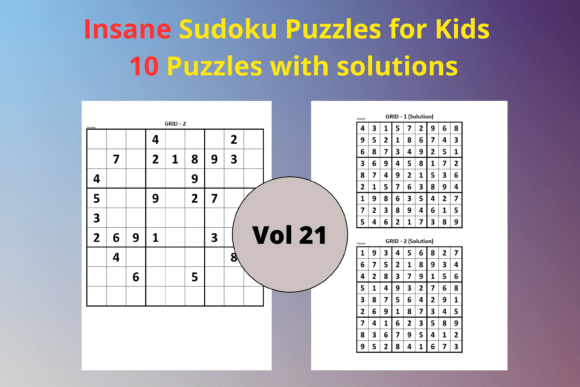
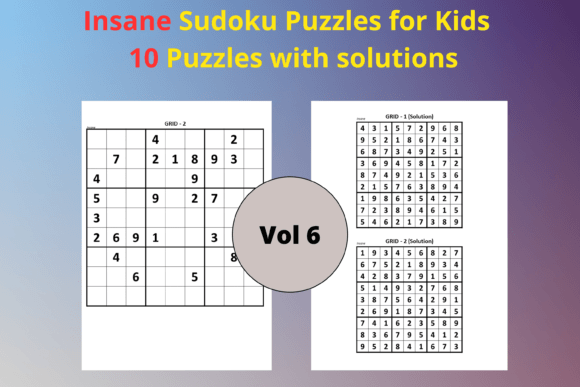
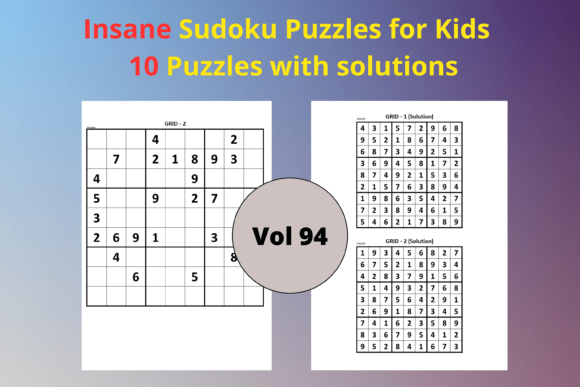
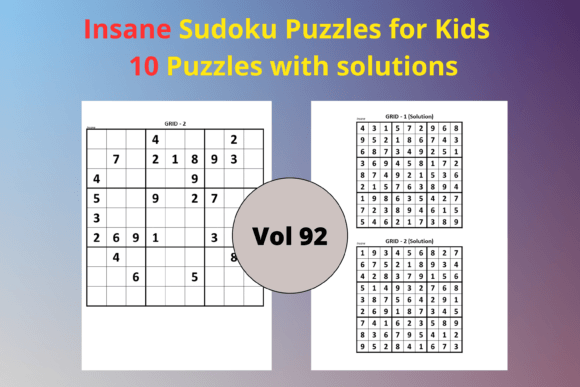
Children thrive when they encounter challenges that feel like play rather than work. A well-designed puzzle sits at that exact intersection, offering just enough resistance to engage the brain without tipping into frustration. Among the many puzzle formats available today, the 9x9 Sudoku grid stands apart as a remarkably effective tool for developing logical reasoning, pattern recognition, and sustained focus. And when the difficulty level is calibrated specifically for beginners, the experience becomes genuinely rewarding rather than intimidating. The Easy Sudoku for Kids 46 collection captures this balance beautifully, delivering ten thoughtfully crafted puzzles that invite young solvers into a world of structured problem-solving.
What makes an easy Sudoku puzzle actually easy? It comes down to the number of given digits, their strategic placement across rows and columns, and the simplicity of the deductive steps required. A beginner-friendly grid typically includes enough pre-filled numbers that a child can rely on direct elimination rather than having to hold multiple possibilities in mind simultaneously. This reduces cognitive load while still reinforcing the fundamental logic that makes Sudoku so valuable. The puzzles in Easy Sudoku for Kids 46 follow this principle closely, offering clear entry points and a gentle learning curve that builds confidence with each completed row.
The Hidden Educational Value of a Simple 9x9 Grid
Parents and educators often reach for worksheets, flashcards, or digital apps when they want to strengthen a child's analytical skills. Sudoku offers something those formats rarely deliver: intrinsic motivation. A child does not complete a Sudoku puzzle because an adult told them to; they complete it because the grid itself demands closure. That internal drive to fill every empty square correctly activates a deeper level of engagement than externally imposed tasks ever could.
Working through the ten puzzles included in Easy Sudoku for Kids 46 encourages several cognitive habits simultaneously. Scanning rows and columns for missing numbers sharpens visual tracking abilities. Testing whether a digit fits in a particular cell builds early hypothesis-testing skills. Recognizing that a wrong placement creates a conflict elsewhere in the grid teaches the value of checking work before declaring it finished. These are transferable skills that show up later in mathematical reasoning, scientific thinking, and even writing structure.
Beyond logic, Sudoku nurtures persistence. An easy-level 9x9 puzzle rarely stumps a child completely, but it does present moments of productive pause. Learning to sit with that brief uncertainty, to scan the grid again with fresh eyes, and to trust the process builds a tolerance for manageable challenge. That emotional regulation around problem-solving serves children far beyond the puzzle page.
What Sets the 46th Collection Apart for Young Solvers
Not all beginner Sudoku packs are created equal. Some rely on smaller 4x4 or 6x6 grids, which can feel like a different activity altogether. The Easy Sudoku for Kids 46 pack stays true to the classic 9x9 format, giving children the authentic experience from the start. This matters because transitioning from simplified grids to full-sized ones often requires re-learning strategies. Starting directly with 9x9 at an easy difficulty level eliminates that awkward transition entirely.
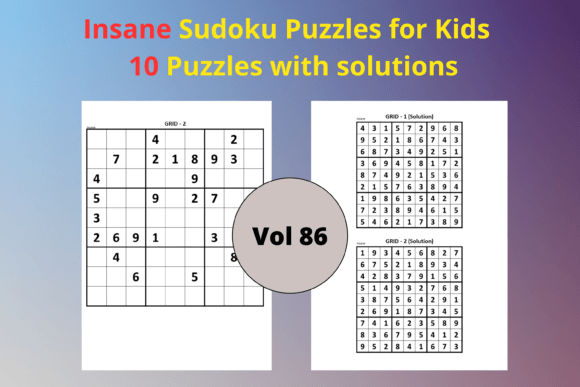
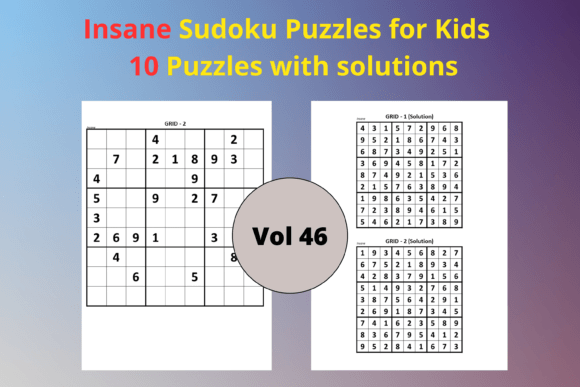
The collection includes exactly ten puzzles paired with ten complete solution pages. This one-to-one ratio is practical: a child can check their own work immediately, turning the solution page into a teaching tool rather than just an answer key. When a young solver compares their completed grid to the provided solution and spots a discrepancy, they naturally retrace their steps. That self-correction process reinforces learning far more effectively than simply being told where they went wrong.
Another thoughtful aspect of this pack is its clean, distraction-free layout. Each puzzle occupies its own page with generously sized cells that accommodate a child's still-developing fine motor skills. There is room to write numbers clearly, to erase and rewrite without smudging, and to focus entirely on the logic without visual clutter competing for attention.
Practical Applications for Parents, Teachers, and Content Creators
The versatility of a well-designed puzzle pack extends beyond the obvious use case of handing it to a child at the kitchen table. Classroom teachers find easy Sudoku puzzles valuable for morning work, early-finisher activities, or quiet transition periods between subjects. The focused, screen-free engagement they provide helps reset attention without overstimulation. Having a ready-to-print PDF means a teacher can pull exactly what they need without searching through mixed-difficulty collections online.
Homeschooling families often integrate puzzles like those in Easy Sudoku for Kids 46 into their daily rhythm as a warm-up before math lessons. The logical thinking required mirrors mathematical reasoning closely enough that the brain enters a problem-solving state, yet the activity feels distinct enough that it does not trigger math anxiety in children who struggle with numbers. This backdoor approach to building analytical confidence works remarkably well in practice.
For independent creators and small publishers, this pack serves a different but equally valuable purpose. The included files come formatted as KDP interiors, meaning they are structured to meet the specifications required for print-on-demand publishing through Amazon's Kindle Direct Publishing platform. The 8.5 x 11 inch trim size matches standard interior formatting, and the clean design ensures that puzzles print clearly without cutoff or alignment issues. Having both a ready-to-upload PDF and an editable PPTX file gives creators flexibility: use the PDF as-is for immediate publishing, or customize the PPTX version with branding, additional instructions, or supplementary content before finalizing.
Understanding the File Formats and Their Uses
The inclusion of two distinct file types in this pack addresses different workflow needs. The PDF file represents the finished product, formatted precisely for upload to KDP or for immediate printing at home. Every puzzle and solution sits correctly within the 8.5 x 11 inch page boundaries, with margins that account for binding requirements. This is the grab-and-go option for anyone who wants professional results without spending time on layout adjustments.
The PPTX file opens the door to customization. A teacher might add school branding or classroom instructions before printing. A publisher might adjust the cover page, insert a table of contents, or modify the solution section's formatting to match a series aesthetic. Because the file is fully editable, the core puzzles remain intact while the surrounding elements adapt to the creator's vision. This dual-format approach acknowledges that different users have different needs, and it removes the friction that typically comes with trying to modify a locked PDF.
Both formats share the same fundamental structure: ten distinct 9x9 Sudoku grids calibrated to an easy difficulty level, each with a corresponding solution grid. The puzzles differ from one another in their given-digit patterns, ensuring that a child solving through the entire pack encounters fresh logical paths rather than repetitive configurations.
How Easy Sudoku Supports Broader Developmental Goals
Stepping back from the specifics of the grid, it is worth examining why puzzle-solving activities have remained relevant across generations while so many other educational tools have come and gone. Sudoku requires no reading comprehension, no cultural knowledge, and no prerequisite skills beyond number recognition up to nine. This accessibility makes it uniquely inclusive. A child who is still developing reading fluency can participate fully. A child learning English as a second language faces no language barrier. The playing field levels itself around pure logical ability.
The Easy Sudoku for Kids 46 puzzles also support executive function development. Planning several moves ahead, inhibiting the impulse to guess randomly, and monitoring progress toward completion all engage the prefrontal cortex in ways that strengthen over time with repeated practice. Children who struggle with impulsivity often find Sudoku calming precisely because the structure rewards careful, deliberate action over speed.
There is also a social dimension worth noting. While Sudoku is typically a solo activity, it easily adapts to collaborative settings. Two children working on the same grid learn to articulate their reasoning, to debate possible placements, and to reach consensus. A parent solving alongside a child models persistence and strategic thinking in real time. These shared experiences around the Easy Sudoku for Kids 46 pack create opportunities for connection that pure independent work does not.
Key Considerations Before Choosing a Sudoku Pack for Young Learners
Several factors distinguish a thoughtfully produced beginner Sudoku collection from a generic assortment. Difficulty calibration sits at the top of that list. A puzzle labeled "easy" that requires advanced techniques like naked pairs or X-wing patterns will frustrate a young solver and potentially damage their willingness to try again. The puzzles in this pack are genuinely accessible, relying primarily on direct elimination and simple cross-referencing between rows and columns.
Presentation quality also matters more than many realize. Small, cramped grids with tiny cells create unnecessary motor challenges for children whose handwriting is still developing. The 8.5 x 11 inch page size used here provides ample space per cell, and the single-puzzle-per-page layout prevents the visual overwhelm that comes from seeing too many grids at once. A child focuses on one challenge, completes it, turns the page, and begins anew. This pacing supports sustained engagement across all ten puzzles.
Solution accessibility represents another practical consideration. Some puzzle books place all solutions at the very end, requiring constant flipping back and forth. The Easy Sudoku for Kids 46 format pairs each puzzle with its solution in a logical sequence, reducing friction and supporting independent checking. For children who are still building confidence, the ability to verify their work quickly and privately matters enormously.
Integrating Sudoku Into Daily Routines and Learning Environments
The ten-puzzle structure of this pack lends itself naturally to a variety of usage patterns. A child might complete one puzzle per day as part of a morning routine, stretching the pack across two school weeks. Alternatively, a weekend session might see two or three puzzles tackled in sequence during a quiet afternoon. The limited quantity prevents burnout while providing enough variety to maintain interest.
In classroom settings, the puzzles can serve as differentiated activities. Students who complete regular assignments quickly can reach for a Sudoku sheet without requiring additional instruction. Those who find the puzzles challenging can work in pairs or receive guided support. The easy difficulty level ensures that most children in the target age range can succeed independently once they understand the basic rules, freeing the teacher to focus attention elsewhere.
For KDP publishers, this pack represents a turnkey interior that slots directly into a broader puzzle book project. The editable PPTX file allows for the addition of introductory pages explaining the rules of Sudoku, tips for beginners, or even a progress tracker that lets kids mark off completed puzzles. Adding these elements transforms a basic puzzle collection into a more complete product that delivers additional perceived value to buyers.
The Lasting Appeal of Paper Puzzles in a Digital World
Screen-based puzzle apps have their place, but paper formats offer distinct advantages for developing brains. Writing by hand engages motor circuits that typing or tapping does not. The physical act of placing a number in a cell creates a stronger memory trace than clicking a screen. Paper also eliminates the distractions inherent to digital devices — no notifications, no temptation to switch apps, no backlight affecting sleep patterns when puzzles are solved in the evening.
The Easy Sudoku for Kids 46 pack embraces these benefits fully. Printed on standard letter-sized paper, the puzzles feel substantial and real. A child can hold a completed page, see their progress, and experience the tactile satisfaction that comes from filling every cell correctly. These sensory components of the experience, subtle as they may seem, contribute to the overall sense of accomplishment that keeps young solvers coming back for more.
Whether the goal is quiet independent activity, educational enrichment, or a publishable product ready for the KDP marketplace, a well-constructed easy Sudoku collection delivers. The combination of ten thoughtfully designed 9x9 puzzles, matching solutions, dual file formats, and print-ready formatting makes this pack a versatile resource that adapts to multiple contexts without sacrificing quality or accessibility.