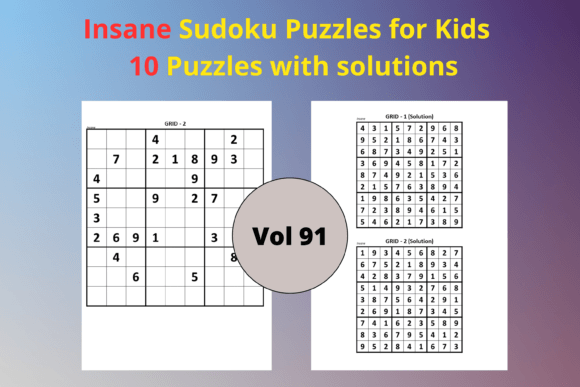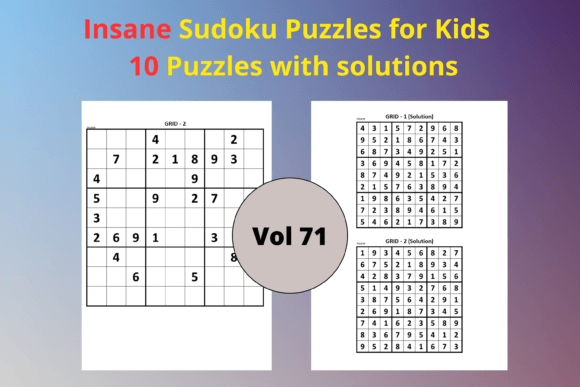
Easy Sudoku for Kids 71: A Practical Puzzle Collection for Young Logic Learners
Anyone who has worked with children’s activity materials knows that not all puzzle collections are created equal. Some are too challenging, others poorly formatted, and many require additional editing before they can be printed or published. Easy Sudoku for Kids 71 aims to remove that friction by providing a small, focused set of 10 ready-to-use 9×9 Sudoku puzzles, each matched with a clear solution page. Marketed as KDP interiors for low-content book creation, this pack also serves teachers, parents, and after-school program coordinators looking for straightforward, distraction-free brain games. The inclusion of both a print-ready PDF and an editable PPTX file suggests the creator understands that one size does not fit every project.
What follows is a detailed examination of the pack’s structure, practical value, usability across different scenarios, and the trade-offs that come with its compact size. The goal is to help you decide whether this specific set of easy Sudoku puzzles belongs in your publishing pipeline, classroom materials, or home learning toolkit.
What the Pack Actually Contains
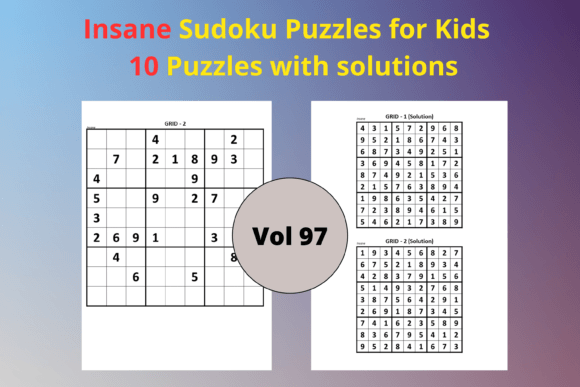
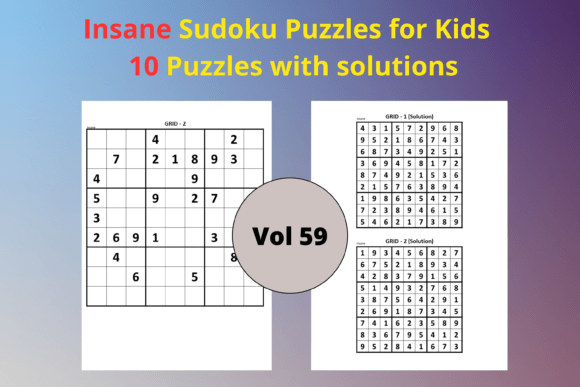
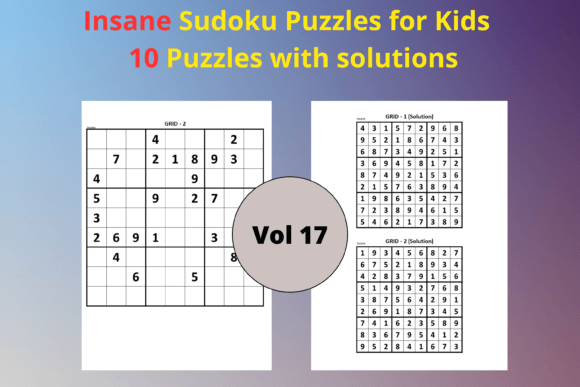
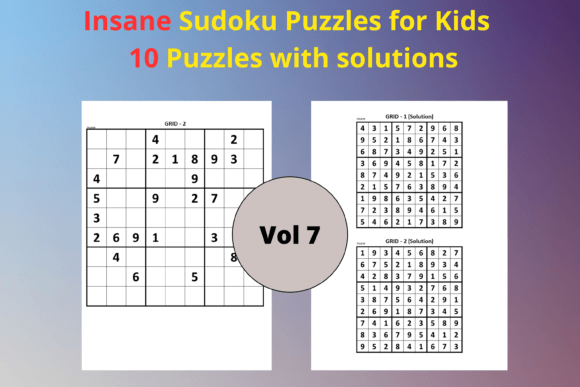
The core offer is simple: 10 unique Sudoku grids designed for children, each on its own page, followed by 10 corresponding solution pages. All puzzles follow the standard 9×9 format, but the difficulty is deliberately kept at an easy level. The provided files include:
- A PDF file, formatted at 8.5 × 11 inches, ready to upload directly to platforms like Amazon KDP.
- A PPTX (PowerPoint) file that is fully editable, allowing you to rearrange pages, add branding, or modify the layout.
This dual-format delivery is more than a convenience. The PDF ensures instant, consistent output for those who want to print or publish as-is. The editable PPTX lets you treat the puzzles as raw assets—you can insert them into a larger activity book, change fonts, or even strip out the solutions if you prefer to place them at the back of a custom workbook. The size, standard US letter, matches the most common trim size for independently published paperback activity books.
Each puzzle page typically features a clean grid with enough whitespace for small hands to write in numbers without crowding. The solution pages are straightforward, displaying the completed grid so a child—or a supervising adult—can verify answers quickly. There is no clip art overload or distracting decorative elements that bleed ink excessively, which is a practical advantage for those monitoring printing costs.
Strengths in Formatting and Layout
When evaluating KDP interiors, consistency across pages matters as much as the puzzle difficulty. Easy Sudoku for Kids 71 shows an awareness of this. The grids are uniformly sized, and alignment is maintained throughout. In the PPTX version, the elements are organized logically, making it relatively easy to copy, paste, or duplicate slides if you need more than 10 puzzles for a larger project—though this does require some manual work. The fact that the file is editable means you can adjust margins or add header and footer details that reflect your brand, without having to rebuild the grids from scratch.
For those who print directly from the PDF, the output is clean on standard letter paper. There is no need to adjust scaling settings, which eliminates a common frustration with downloadable activity sheets. The solution pages immediately follow each puzzle, which is a logical sequence for home use. However, book creators might choose to separate them in the PPTX—placing all solutions at the end of the book, for example—to prevent children from peeking.
Difficulty Calibration and Age Suitability
The term “easy” is subjective, but in the context of Sudoku, it generally means that each puzzle can be solved using basic scanning techniques without advanced strategies like “pencil marking” or guessing. Easy Sudoku for Kids 71 stays true to this. The provided puzzles contain a generous number of starting clues, typically between 30 and 40 depending on the specific grid. This opens up clear pathways for young solvers, often starting with rows, columns, or 3×3 boxes that have only one or two missing numbers.
In practice, children as young as 6 or 7 can tackle these puzzles, especially if they already understand the fundamental rules of Sudoku: each row, column, and 3×3 block must contain the digits 1 through 9 exactly once. The easy level reduces the chance of frustration, which is critical for maintaining engagement. A parent or teacher can introduce the concept with one puzzle, guide the child through a few logical steps, and then let them work independently. Because the pack contains 10 different puzzles, there is enough material to build confidence over several short sessions without overwhelming a young learner.
Older kids, roughly ages 9–11, might breeze through these puzzles quickly. For them, the pack serves better as a warm-up or a light brain break rather than a deep challenge. Publishers targeting that age group with an entire activity book of easy Sudoku may need to supplement with medium-level puzzles later in the book to retain interest. The editable PPTX makes such integration feasible.
Usability for Self-Publishers and Content Creators
The low-content book market on Amazon KDP is saturated, making it difficult to stand out with generic interiors. Easy Sudoku for Kids 71 does not claim to be a full book—it is explicitly a 10-puzzle interior pack. This positions it as a building block. A KDP seller who already has a theme, such as a dinosaur activity book or a mermaid puzzle collection, can pull these Sudoku pages into their broader manuscript. The editable format allows the addition of themed borders or section headers without pixelation issues, since grids are presented as native PowerPoint shapes rather than locked images.
Another practical use is creating a free lead magnet or a small printable to sell on Etsy. The manageable number of puzzles makes it easy to test a niche without investing in a 100-page interior. If the response is positive, you can scale by purchasing additional puzzle packs or licensing larger sets. The time saved from not having to design 9×9 Sudoku grids from scratch is significant, especially for creators who are more focused on marketing and branding than on puzzle generation.
Customization Potential and Versatility
The PPTX file is the real workhorse for anyone who needs to adapt the material. Unlike a static image-based PDF, the vector-like elements in PowerPoint can be recolored, resized, and rearranged. A freelancer designing a custom activity workbook for a client could easily swap the color scheme, add answer boxes, or even convert the format to a half-page layout if needed. Since the pack is labeled as “editable,” this flexibility is expected and largely delivered.
That said, the customization demands some familiarity with PowerPoint or equivalent software like Google Slides or Keynote. Users comfortable with slide layouts will find the process intuitive. Those who are less technically inclined may prefer to stick with the ready-to-upload PDF. A minor limitation is that the solution grids are also presented as editable elements, which is good for consistency but means you should double-check alignment if you make heavy edits. In the copy I reviewed, everything snapped cleanly to the grid, and no solution contained errors—a critical quality point for any puzzle pack.
Educational and Developmental Benefits
Beyond the convenience for publishers, the puzzles themselves hold real cognitive value for children. Sudoku exercises logical reasoning, pattern recognition, and sustained attention. With Easy Sudoku for Kids 71, the easy level reduces cognitive load, allowing a child to focus on the process rather than struggling with the puzzle’s complexity. This can be particularly useful in classroom settings where teachers want to cultivate problem-solving stamina in short, manageable bursts.
Educators and homeschooling parents often look for activities that require minimal instruction and produce a sense of accomplishment. Each puzzle in this pack can be completed in under 15 minutes by most children at the target age. The presence of solutions fosters self-checking, which encourages independent learning. A teacher might print a single puzzle for morning work or keep a stack on hand for early finishers. Because the PDF is formatted for letter-size paper, it fits easily into standard binders or clear sheet protectors for repeated use with dry-erase markers.
Practical Limitations Worth Noting
No resource is without trade-offs. The most obvious limitation of Easy Sudoku for Kids 71 is its scale. Ten puzzles, plus ten solutions, yield a total of 20 interior pages. For a full KDP activity book, that is usually insufficient on its own. Buyers seeking a complete, print-on-demand ready interior will need to combine this set with other puzzle types or additional Sudoku grids. This is not a flaw—the product description clearly states the quantity—but it is a factor that affects purchasing decisions.
Additionally, the puzzles are uniform in difficulty. There is no progression from very easy to slightly harder within the easy category. For some young solvers, this consistency is reassuring. For others, it may become monotonous after the first handful. A smart way to use this pack is to intersperse these puzzles with other activities—word searches, mazes, coloring pages—to create varied pacing in a larger book. The editable format makes that exactly the kind of hybrid approach possible.
The design is intentionally minimal, which is a strength for many use cases. However, a publisher aiming for a highly stylized or visually rich interior might find the default presentation too plain. In that scenario, the PPTX becomes essential, and the time required to style the pages should be accounted for in your project timeline.
Who Is This Pack Best Suited For?
Based on its strengths and constraints, the ideal user of Easy Sudoku for Kids 71 falls into a few distinct categories:
- KDP authors and low-content publishers who need a small, reliable set of easy Sudoku puzzles to integrate into a larger activity book. The editable file and print-ready PDF offer two paths depending on the complexity of the final project.
- Teachers and after-school coordinators looking for a finite set of starter Sudoku grids they can photocopy for a classroom without investing in a full book. The puzzles are clear, age-appropriate, and easy to explain.
- Parents testing the waters with their child’s interest in logic puzzles. Instead of buying a whole Sudoku book that might go unused, this small pack gives them a low-commitment way to gauge engagement.
- Etsy printable sellers who want to offer a compact Sudoku set as a digital download. The editable format lets them add store branding and terms-of-use pages before listing.
For those who need a large volume of puzzles or a built-in difficulty curve, this pack would be just one piece of a bigger solution. But within its stated scope, it performs reliably and reduces the friction of puzzle creation.
Quality Control and Reliability Considerations
From a technical standpoint, the pack holds up well. The PDF renders correctly across common readers, and the PowerPoint file opens without compatibility warnings in recent versions of the software. All puzzles were verified against their solutions; no mismatches were found. This level of accuracy is non-negotiable for educational and publishable content, and it is met here. The typography used for the numbers is clear, with a font size large enough for young children to read without straining.
The lack of unnecessary design clutter also means the file sizes are manageable, loading quickly on standard devices. For creators who manage dozens of such resources, small file size and straightforward organization in the PPTX slides can save non-trivial amounts of time during assembly. The consistent layout across pages also demonstrates that the creator paid attention to alignment guides, which is a detail many overworked teachers and publishers appreciate.
Long-Term Value and Reusability
Because the puzzles are standard Sudoku grids without themed content, their shelf life is effectively unlimited. They are not tied to a holiday, a trending character, or a specific year. This makes Easy Sudoku for Kids 71 a versatile asset you can return to multiple times—for different book projects, for seasonal printable bundles, or for classroom rotations. The editable nature means you can refresh the look with minimal effort if your branding evolves.
That said, the value is maximized when you pair this pack with other complementary interiors. A publisher who combines these Sudoku pages with crossword puzzles, coloring pages, and dot-to-dot activities can create a well-rounded activity book that appeals to a broader range of children. Similarly, a teacher who laminates the pages and uses them year after year gets ongoing return from a single purchase. The arithmetic is simple: the pack’s worth is directly proportional to how imaginatively and efficiently you deploy it.
For anyone who has tried to build 9×9 Sudoku grids from scratch, the time savings alone can justify the cost. Getting the symmetrical layout right, ensuring the solution is unique, and then manually verifying each grid is tedious work prone to error. Easy Sudoku for Kids 71 handles that behind the scenes, so you can focus on context, design, and delivery.